
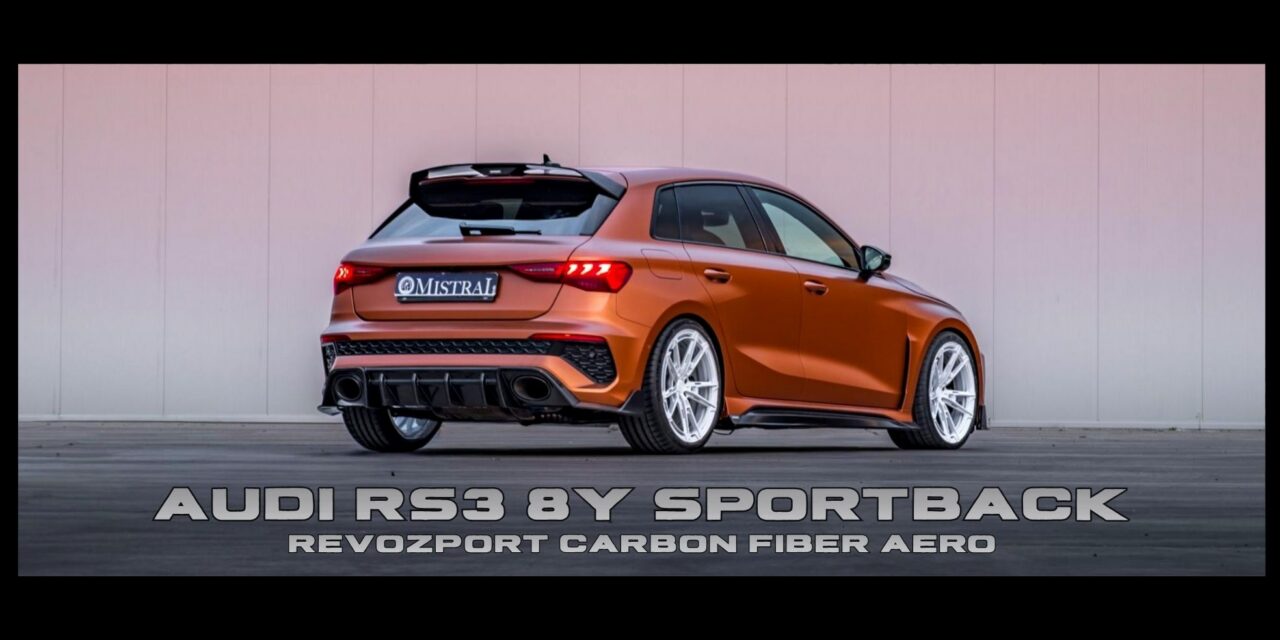

The Audi RS3 8Y Sportback combines compact hatchback practicality with the engineering of a serious performance car. Its turbocharged 2.5-liter five-cylinder engine, quattro all-wheel-drive system, and widened front track give it a distinctive position within Audi’s RS lineup. Unlike larger performance sedans and estates, the RS3 delivers its performance in a relatively short, muscular, five-door body.
The factory exterior already features a prominent Singleframe grille, enlarged front air intakes, sculpted wheel arches, and an aggressive rear bumper. However, these elements must balance visual appeal with production requirements, cooling, everyday usability, and aerodynamic efficiency.
For owners seeking a more individual appearance, a complete Audi RS3 8Y Sportback carbon fiber body kit offers a coordinated approach to exterior customization. Front lips, grille accents, canards, side skirts, rear diffusers, and roof spoilers can refine the car’s proportions while preserving its recognizable hatchback silhouette.
The effectiveness of these upgrades depends on component design, material quality, fitment accuracy, and how individual parts complement the original bodywork.

Understanding the Audi RS3 8Y Sportback’s Exterior Design
The 8Y-generation RS3 Sportback introduced a more angular design than its predecessor. Its wide front grille, pronounced bumper openings, and sculpted side surfaces give the compact hatchback a substantial road presence.
The vehicle’s relatively short wheelbase and rear overhang also influence how exterior modifications should be designed.
Unlike a longer performance estate, the RS3 Sportback has less body length available to visually connect aggressive front and rear components. Oversized accessories can therefore disrupt its proportions.
For example, a deep front lip may make the nose appear lower, but without corresponding side skirt extensions, the middle of the car can appear comparatively unfinished.
Similarly, an aggressive rear diffuser needs to complement the bumper’s existing geometry and the RS3’s signature oval exhaust outlets.
A complete styling package addresses these relationships by creating a consistent design from the front bumper to the rear hatch.
How a Carbon Fiber Front Lip Changes the RS3 8Y
The front bumper is one of the RS3 Sportback’s most recognizable features. Its large air openings and angular surfaces already establish a performance-oriented appearance.
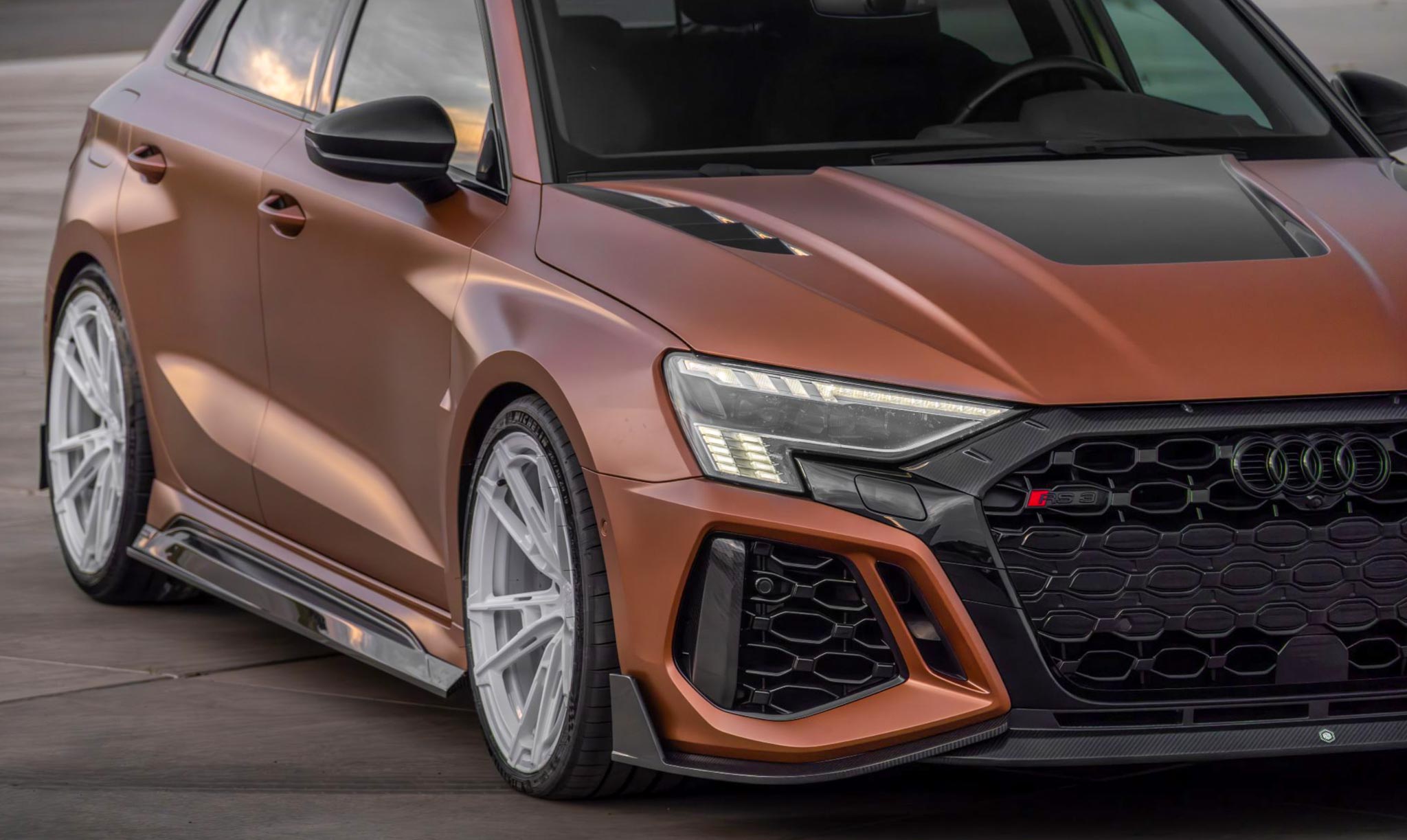
A carbon fiber front lip introduces another horizontal element beneath this design.
Creating a Lower and Wider Front Profile
A properly proportioned front lip follows the lower edge of the bumper and extends toward its outer corners.
This creates a more defined visual boundary between the front fascia and the road surface, making the RS3 appear wider and more planted.
The effect is particularly noticeable from front three-quarter angles, where the exposed carbon fiber contrasts with the painted bumper.
For the 2021–2024 RS3 8Y Pre-LCI Sportback, REVOZPORT’s Street Program includes a model-specific front lip designed to complement the original bumper lines.
Understanding Aerodynamic Effects
A front lip can influence airflow entering the vehicle’s underbody region.
A functional splitter may contribute to front downforce by changing the pressure distribution around its upper and lower surfaces.
However, aerodynamic performance depends on component projection, ground clearance, mounting rigidity, and surrounding body geometry.
A styling-focused front lip should not automatically be considered a functional motorsport splitter.
For everyday RS3 owners, maintaining practical clearance around parking ramps, driveways, and uneven roads remains an important consideration.
Carbon Fiber Grille Accents and Front Canards
The RS3 8Y’s front grille occupies a substantial portion of its bumper, making it a natural area for visual customization.
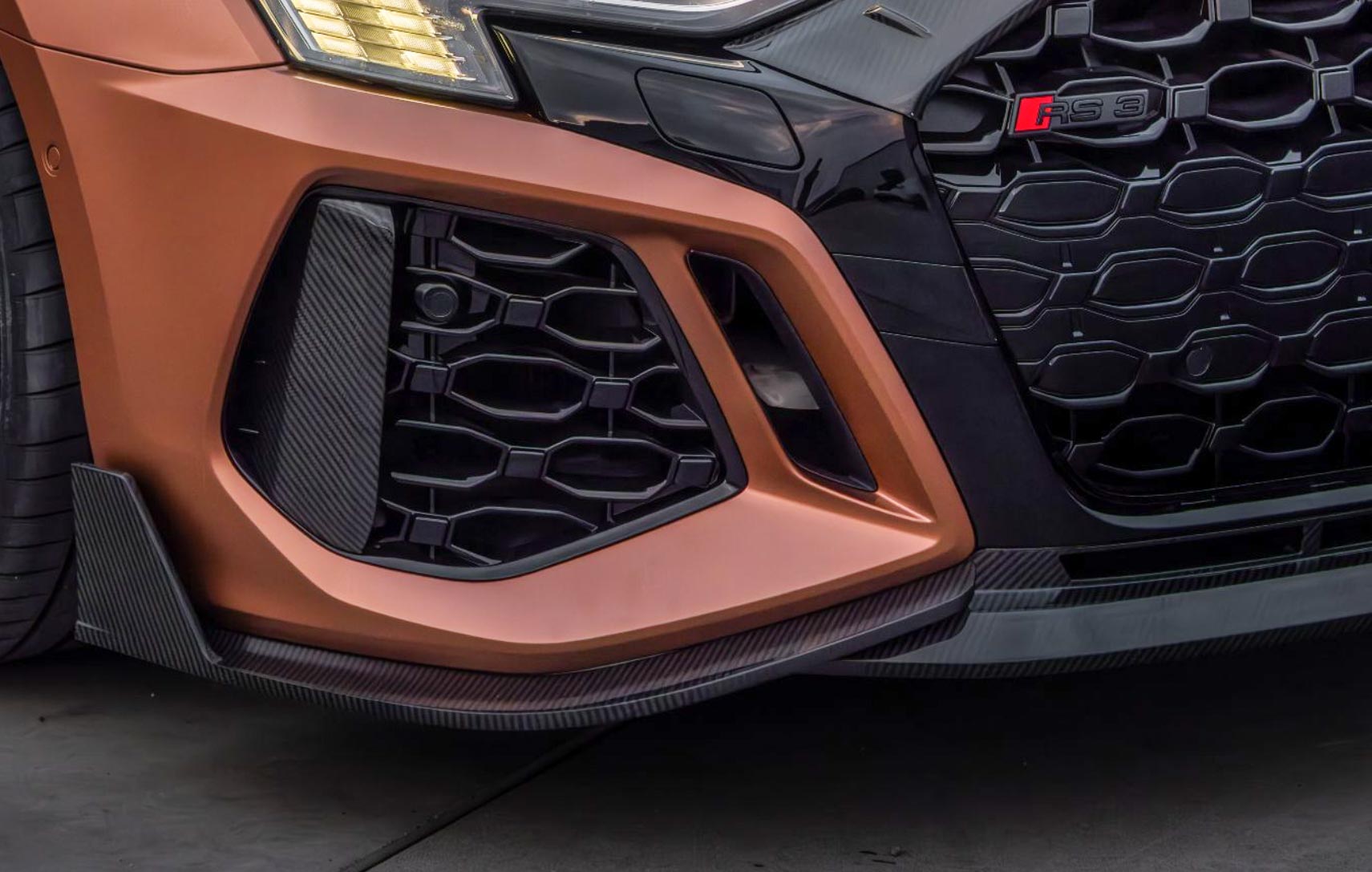
Carbon fiber grille accents can add texture and contrast without replacing the entire front fascia.
When coordinated with the front lip, these elements create a more unified appearance around the lower bumper.
The Role of Front Canards
Canards are small aerodynamic-style extensions positioned near the outer corners of the front bumper.
In properly developed aerodynamic systems, canards can influence local airflow and generate aerodynamic forces.
Their effectiveness depends on shape, placement, and interaction with surrounding bodywork.
On the RS3 Sportback, carbon fiber canards also emphasize the bumper’s angular design.
However, larger canards are not automatically more effective. Poorly positioned components can increase drag or create unnecessary turbulence.
For a street-oriented build, canards should complement the front lip and grille rather than dominate the vehicle’s appearance.
Carbon Fiber Hood Design and Material Quality
The hood forms a major visual connection between the RS3’s front grille, headlights, and windshield.
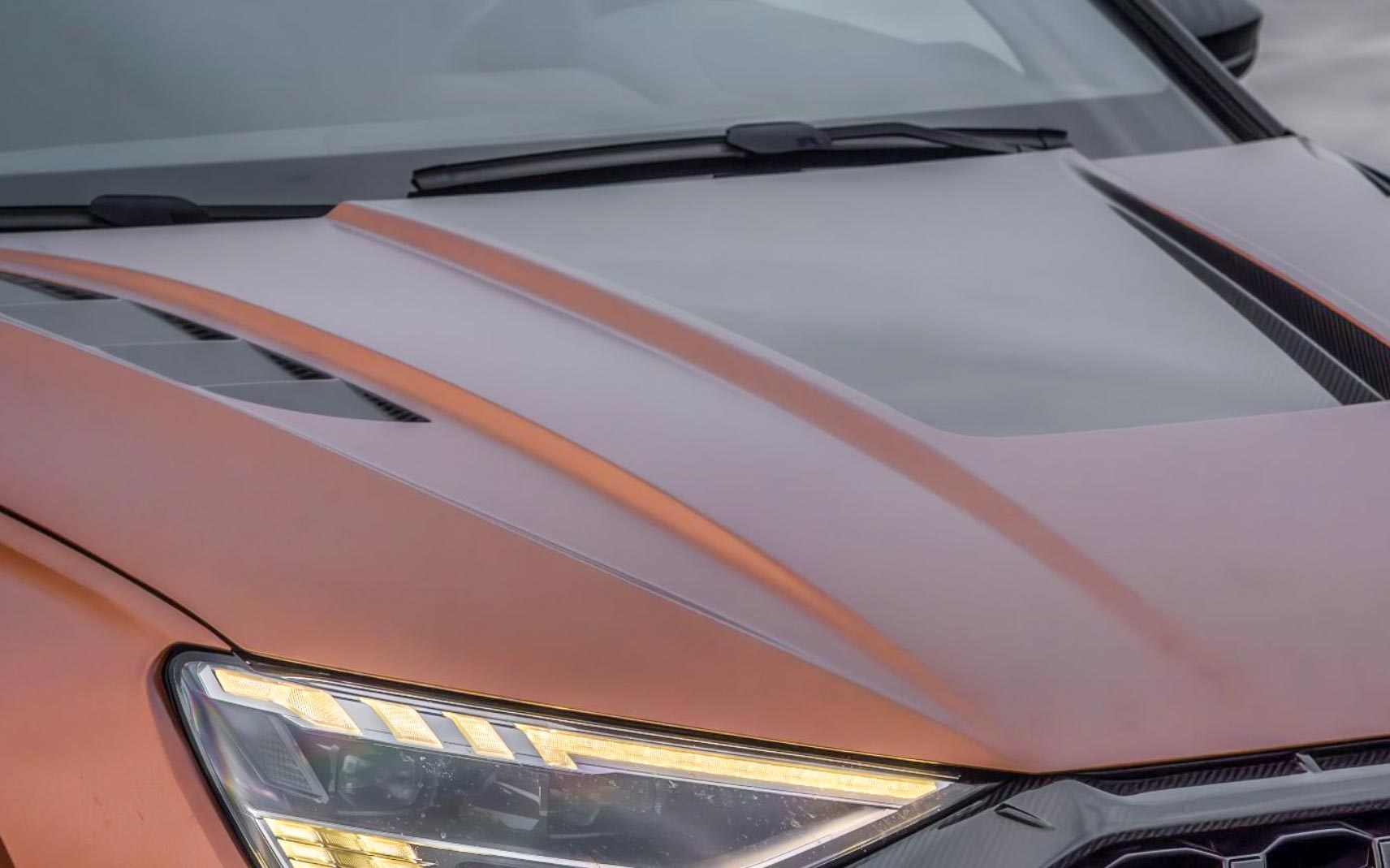
Replacing the factory hood with a carbon fiber component can introduce additional surface definition while extending the carbon theme beyond the lower bumper.
Improving Front-End Styling
A sculpted carbon fiber hood can emphasize the RS3’s centerline and create stronger visual depth across the front bodywork.
Exposed carbon produces a noticeable contrast against lighter paint colors, while darker exterior finishes allow a more understated appearance.
The REVOZPORT RS3 8Y Sportback collection includes a carbon fiber hood intended to complement the front lip, grille, and canards.
For a cohesive result, the hood’s surface design should follow the original vehicle proportions rather than introduce unrelated styling features.
Why Carbon Fiber Construction Matters
Carbon fiber reinforced polymer combines carbon reinforcement with a resin matrix.
Its structural properties depend on fiber orientation, laminate thickness, resin selection, and manufacturing quality.
Properly engineered carbon fiber components can provide favorable stiffness-to-weight characteristics.
However, a carbon fiber hood is not automatically lighter or stronger than every alternative.
Mounting reinforcement, latch compatibility, panel alignment, and surface protection are equally important.
For a premium performance hatchback, consistent panel gaps and a durable clear-coated finish contribute significantly to the quality of the completed installation.

Carbon Fiber Side Skirts and the RS3’s Compact Profile
The RS3 Sportback’s short, muscular body makes the lower side profile especially important.
Side skirts visually connect the front bumper with the rear wheel arches, creating a continuous horizontal line beneath the doors.
Establishing Visual Continuity
Carbon fiber side skirts extend the styling established by the front lip toward the rear of the vehicle.
This makes the lower body appear more consistent without requiring changes to suspension geometry.
On the RS3, the effect complements the factory wheel arches and emphasizes the compact hatchback’s broad stance.
A properly designed skirt should follow the original sill geometry and avoid excessive outward projection.
Airflow Along the Lower Body
Side skirts can influence airflow around the vehicle’s lower surfaces, particularly near the rotating wheels.
In functional aerodynamic systems, carefully shaped skirts may help manage air movement between the vehicle’s sides and underbody.
However, the actual aerodynamic effect depends on geometry, ride height, and surrounding components.
For most street-focused RS3 builds, consistent exterior styling and accurate fitment remain the primary considerations.
Complete Carbon Fiber Styling Packages vs. Individual Upgrades
Individual carbon fiber accessories allow owners to modify specific areas gradually. A complete package, however, provides a more coordinated approach.
The front lip establishes the lower front profile, while side skirts carry that visual line toward the rear wheels. A rear diffuser completes the lower-body treatment, and a roof spoiler adds definition above the hatch.
Specialist automotive styling manufacturers such as REVOZPORT develop model-specific carbon fiber exterior programmes around these relationships.
Its Audi RS3 8Y Pre-LCI Sportback Street Program includes a front lip, grille add-on, canards, hood, side skirts, rear diffuser, and roof spoiler. The manufacturer lists dry carbon and gloss-black finish options for the programme.
The main advantage of a coordinated package is consistency. Components developed around the same body shape can follow complementary design lines and finishes.
This does not mean every RS3 requires every available accessory. A restrained build may benefit from a front lip, side skirts, and rear diffuser.
A more extensive exterior transformation can incorporate the hood, grille accents, canards, and roof spoiler.
The appropriate combination depends on the owner’s styling preferences and intended use.

Rear Diffusers and Roof Spoilers for the RS3 Sportback
The rear of the Audi RS3 8Y Sportback differs considerably from that of a longer performance estate.
Its short hatch, upright rear window, and wide bumper create a compact rear profile.
Carbon fiber components can introduce additional depth without changing the vehicle’s basic proportions.
Rear Diffuser Design
A carbon fiber rear diffuser adds sculpted surfaces beneath the bumper and around the RS3’s oval exhaust outlets.
The component creates a more defined lower rear section while complementing the front lip and side skirts.
In functional aerodynamic systems, a diffuser manages airflow exiting the underbody.
Its effectiveness depends on underfloor geometry, expansion angle, ride height, and surrounding airflow.
A diffuser-style exterior component should not be assumed to produce measurable downforce without appropriate testing.
Roof Spoiler Integration
The RS3 Sportback’s roofline terminates above a relatively upright rear window.
A carbon fiber roof spoiler extends this upper boundary, creating a more pronounced transition between the roof and rear hatch.
The additional visual length can make the rear appear less abrupt.
Spoilers may also influence airflow separation, although their aerodynamic effect depends on their specific geometry.
For a street-focused RS3, maintaining the hatchback’s original proportions is generally preferable to selecting an oversized spoiler.
Choosing the Right Carbon Fiber Finish
Material finish has a significant influence on the appearance of an RS3 carbon fiber styling package.
Exposed carbon fiber provides a recognizable woven texture, while gloss-black components can blend more closely with the vehicle’s original trim.
A glossy carbon finish emphasizes surface reflections and weave depth. A less reflective finish creates a more subdued appearance.
Whichever finish is selected, consistency matters.
A carbon front lip combined with differently textured side skirts can make the exterior appear assembled from unrelated components.
Clear-coat quality also deserves attention because UV exposure, cleaning chemicals, and road debris can affect the protective surface over time.
For a premium vehicle such as the RS3, accurate panel alignment and properly finished edges remain essential.
Fitment and Installation Considerations
Before purchasing an Audi RS3 8Y body kit, owners should verify compatibility with their exact vehicle configuration.
The REVOZPORT collection specifically targets the 2021–2024 Audi RS3 8Y Pre-LCI Sportback.
This distinction matters because the facelifted RS3 and the RS3 Sedan have different exterior configurations.
A component designed for the Pre-LCI Sportback should not automatically be assumed to fit another version.
Professional installation is advisable for replacement hoods, front lips, and other components requiring secure mounting.
Installers should inspect panel gaps, mounting points, ground clearance, and compatibility with factory sensors.
Replacement hoods also require careful attention to hinges, latch operation, and supporting hardware.
After installation, all affected vehicle systems should operate correctly, and any required sensor calibration should follow the manufacturer’s service procedures.
Maintaining Audi RS3 Carbon Fiber Exterior Parts
Carbon fiber components require regular maintenance to preserve their finish.
Clear-coated surfaces should be cleaned using automotive-safe products and soft washing materials.
Abrasive cleaners can damage protective coatings, while accumulated dirt around lower components may contribute to surface wear.
Front lips and side skirts are particularly exposed to road debris and occasional ground contact.
Periodic inspection helps identify coating damage, loose mounting points, or cracks before they become more serious.
Replacement hoods and spoilers should also be checked around their attachment points.
Proper maintenance helps preserve both the appearance and condition of the styling package.
A Balanced Approach to Audi RS3 8Y Sportback Customization
The Audi RS3 8Y Sportback already combines compact dimensions, distinctive five-cylinder performance, and aggressive factory styling.
A complete carbon fiber styling package can refine these characteristics through a more defined front profile, continuous lower-body detailing, and stronger rear styling.
The most effective transformations depend on coordinated component design, material quality, accurate fitment, and professional installation.
For owners seeking subtle exterior changes, a front lip, side skirts, and rear diffuser provide a logical starting point. A more comprehensive package can incorporate the hood, grille accents, canards, and roof spoiler.
Ultimately, the value of an Audi RS3 8Y Sportback carbon fiber body kit lies in how successfully its components work together while preserving the vehicle’s compact, performance-focused identity.