
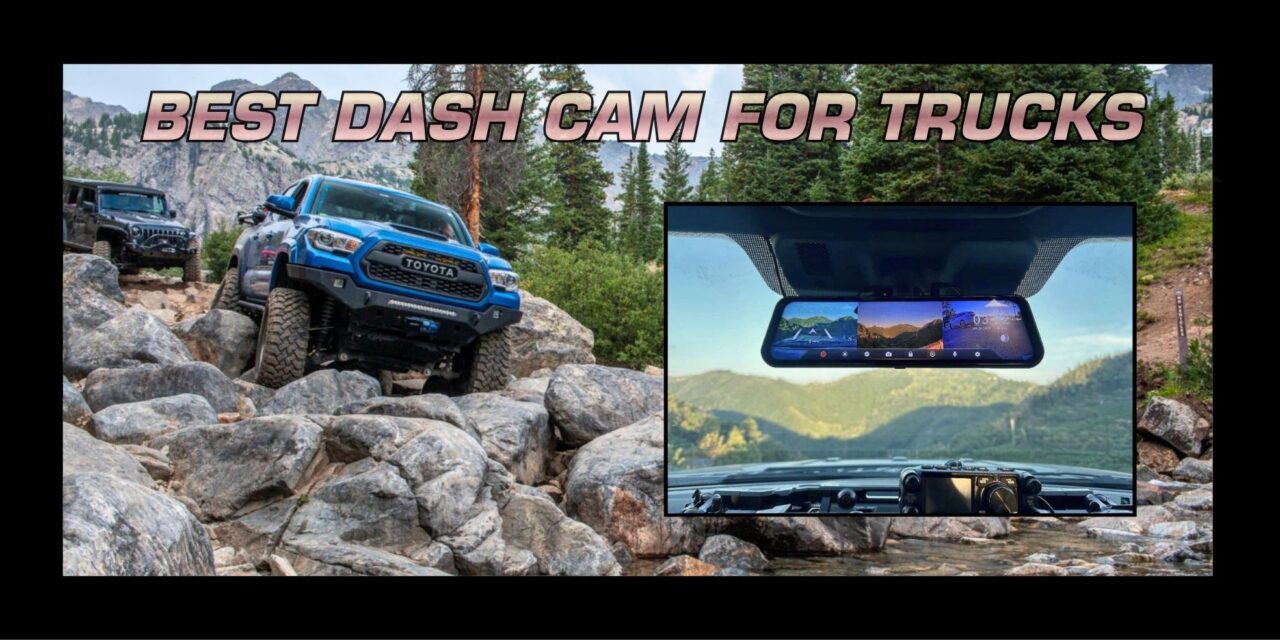

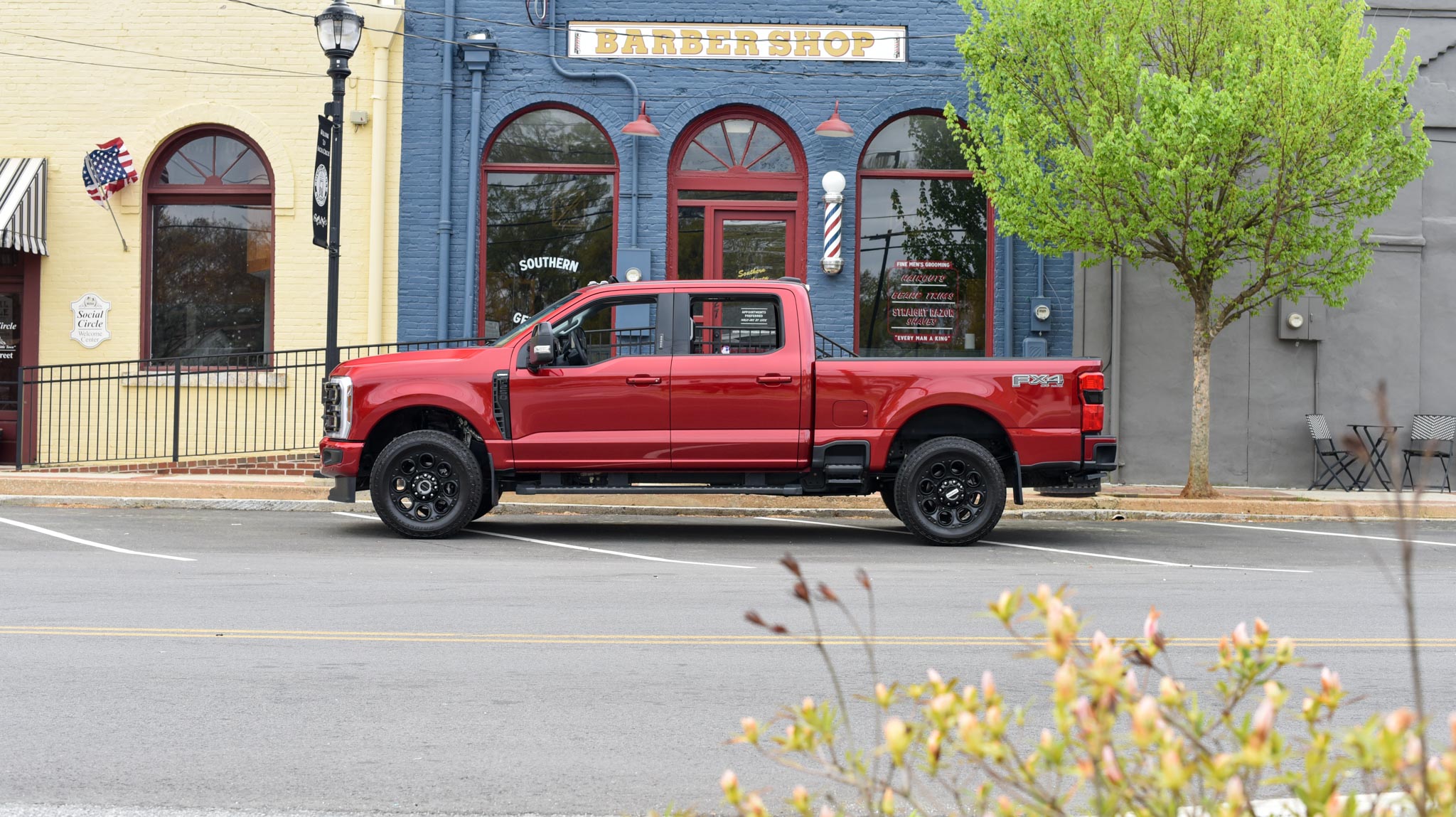
A truck can be easy to drive on an open highway, and yet surprisingly difficult to judge in a tight parking lot, on a busy job site, or along a rough trail. The higher seating position gives you a great view into the distance, but the long hood and size of the vehicle can make it harder to see what’s happening close to the bumper, or directly behind you.
A dash cam can help fill in some of those gaps while keeping a reliable record of the road. The important part is choosing a setup that fits the way you actually use your truck. Someone who spends most of the week commuting has different needs from a driver who regularly tows, works on construction sites, or heads off pavement on weekends.
This guide focuses on those real-world differences: which camera angles are worth having, what specifications actually matter, and when features such as a bumper camera, GPS, parking monitoring, and higher-resolution recording are genuinely useful.
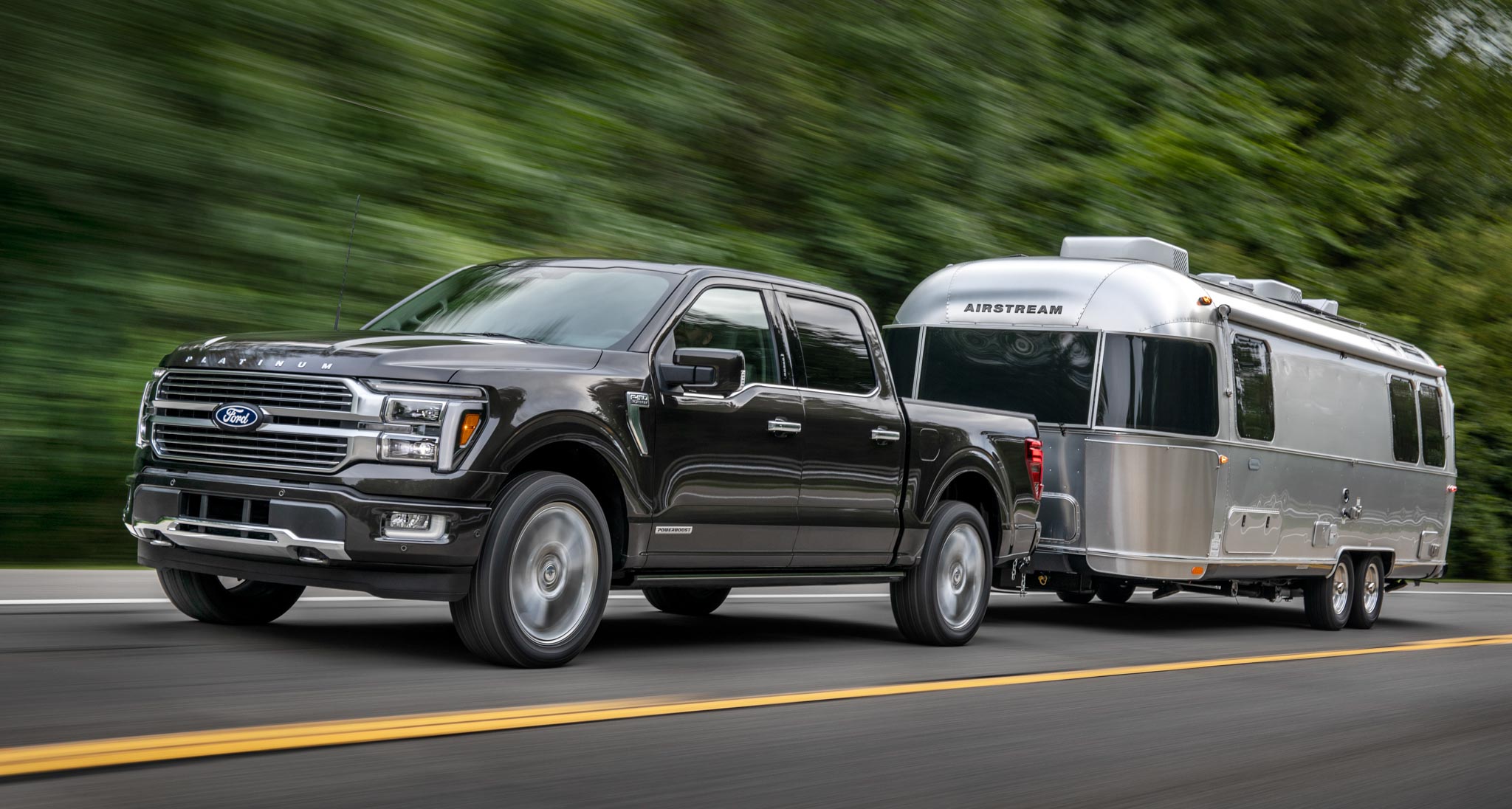
F-150 Platinum
Why Is a Dash Cam Especially Useful for a Truck?
A dash cam gives truck drivers a continuous visual record of what happens on the road. That can be useful after an accident, during an insurance claim, or whenever there is disagreement about how an incident occurred.
For trucks, however, coverage matters just as much as simply having a camera.
A conventional front-facing dash cam records what is happening farther ahead, while a rear camera provides evidence of vehicles approaching or following from behind. Trucks can still have difficult-to-see areas immediately around the vehicle, particularly near the front bumper.
This matters for more than road incidents. Pickup owners may regularly navigate job sites, parking areas, campsites, narrow access roads, or uneven terrain. Drivers who tow also have additional vehicle length and positioning to consider.
A well-planned camera setup can therefore provide useful coverage in places that are harder to judge from the driver’s seat while also maintaining a record of events around the vehicle.
What Should You Look for in a Truck Dash Cam?
The right camera setup depends on how and where you use your vehicle. When comparing a truck dash cam, start with the areas you actually need to record. Front and rear coverage may be enough for regular highway driving, while a pickup used on job sites, rough roads, or trails may benefit from an additional exterior camera.
Image quality matters too, but resolution should not be considered on its own. Camera placement, sensor quality, low-light performance, storage capacity, and the durability of any exterior-mounted camera all affect how useful the footage will be in real driving conditions.
Multi-Camera Coverage
Front and rear recording should be a starting point for drivers who want broader evidence coverage. A third camera becomes particularly valuable when it serves a specific purpose.
For example, an interior-facing camera makes sense for drivers who need cabin footage. A bumper-mounted camera serves a completely different purpose by showing an area much closer to the front of the vehicle.
The right configuration therefore matters more than simply choosing the system with the largest number of cameras.
High-Resolution Video
Resolution determines how much visual information a camera can preserve. A 4K front camera provides significantly more image data than basic Full HD recording, which can be useful when reviewing road details after an incident.
Rear-camera quality matters as well. A system combining 4K front footage with 2K or higher rear footage provides better-balanced coverage than one that pairs a high-resolution front camera with a low-resolution rear unit.
Low-Light Performance and HDR
Resolution alone does not determine image quality. The sensor and image processing are especially important when driving after dark.
HDR can help cameras deal with scenes containing both bright and dark areas, such as headlights against an otherwise poorly lit road. Modern sensors designed for low-light capture can further improve usable footage at night.
Exterior Camera Durability
Any camera mounted near a truck’s bumper or underbody needs to cope with conditions that an interior camera never encounters.
Water resistance should therefore be checked carefully when selecting an exterior camera. The mounting location and cable routing also need to suit the truck and the environments in which it is driven.
GPS, Parking Protection, and Connectivity
Built-in GPS can add location, route, and speed information to recordings. A G-sensor can protect important footage when an impact is detected, while parking-monitoring functions can provide additional coverage when the vehicle is unattended.
Wi-Fi and app connectivity can also make it easier to access and manage footage without repeatedly removing the memory card.
What Is the Best Dash Cam for a Truck in 2026?
For pickup and work-truck owners who specifically want front, rear, and close-range bumper coverage, the WOLFBOX G900TriPro Bumper Version is a strong option to consider in 2026. Its biggest advantage is its three-camera configuration: A 4K front camera, 2.5K rear camera, and 1080p exterior bumper camera.
The front camera records at 3840 × 2160 at 30 fps and uses a Sony STARVIS 2 IMX678 sensor. The rear camera records at 2560 × 1440 at 30 fps and uses an OmniVision OS04J10 sensor. The additional bumper camera records in 1080p and is rated IP67, making it suitable for an exterior mounting position.
This combination addresses a specific problem for larger vehicles. A conventional windshield camera is useful for documenting the road ahead, but does not necessarily provide a useful view immediately in front of a tall truck. The bumper camera adds a lower perspective for close obstacles and terrain.
The G900TriPro also uses a 12-inch IPS touchscreen mirror display and includes GPS, 5.8GHz Wi-Fi connectivity, app control, voice control, a G-sensor, loop recording, and parking-monitoring support when installed with the appropriate hardwire setup.
For pickup owners, work-truck drivers, and off-road users, the main reason to choose the G900TriPro Bumper Version over a conventional front-and-rear system is the additional low-mounted exterior view, while still retaining high-resolution front and rear recording. That makes it particularly relevant for drivers who have an actual need for close-range exterior visibility, rather than an interior-facing third camera.
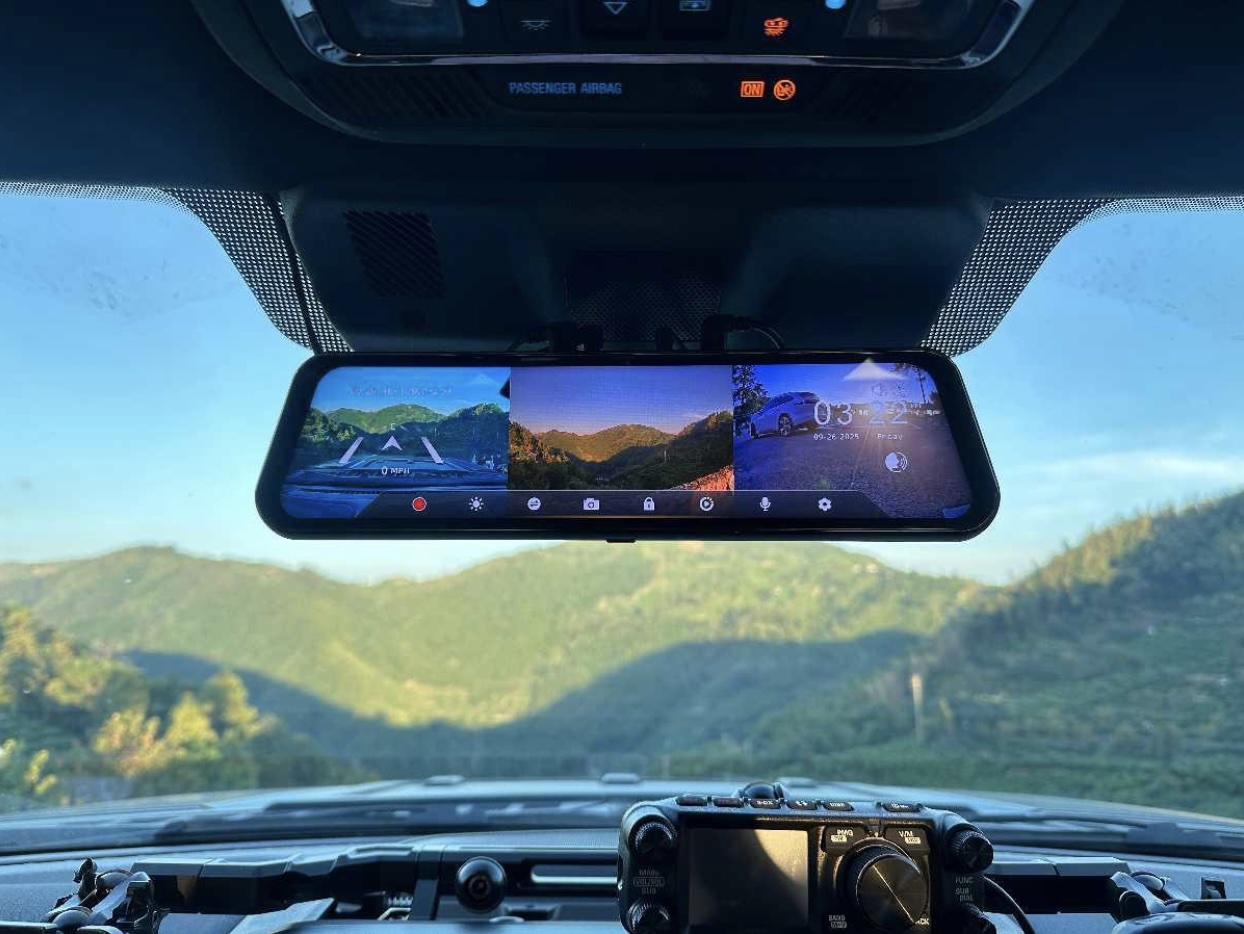
How Does a Three-Camera Setup Cover a Truck?
The benefit of a three-camera system becomes clearer when each camera has a specific job rather than simply adding another recording angle.
The G900TriPro Bumper Version is a useful example of this approach.
4K Front Camera
The primary camera handles normal forward road recording. In the G900TriPro, the Sony STARVIS 2 IMX678 sensor captures 4K video at 30 fps, providing the highest-resolution footage in the system.
This is the camera responsible for documenting vehicles, traffic conditions, road layouts, and events occurring ahead of the truck.
2.5K Rear Camera
At the other end of the vehicle, the rear camera records at 2560 × 1440 at 30 fps.
Rear footage can provide another perspective if the vehicle is hit from behind, or an incident develops behind the driver’s normal field of view. A rear camera can also be useful when cargo or the vehicle’s configuration makes physical rearward visibility less convenient.
1080p Bumper Camera
The third camera is what makes this particular configuration different from a conventional front-rear-cabin setup.
Instead of pointing into the cab, the 1080p IP67-rated camera can be positioned near the front bumper. Its purpose is not to replace the primary road-facing camera, but to provide a lower, closer view of the area immediately ahead.
One camera therefore records the wider road scene, while the other provides a view closer to the vehicle.
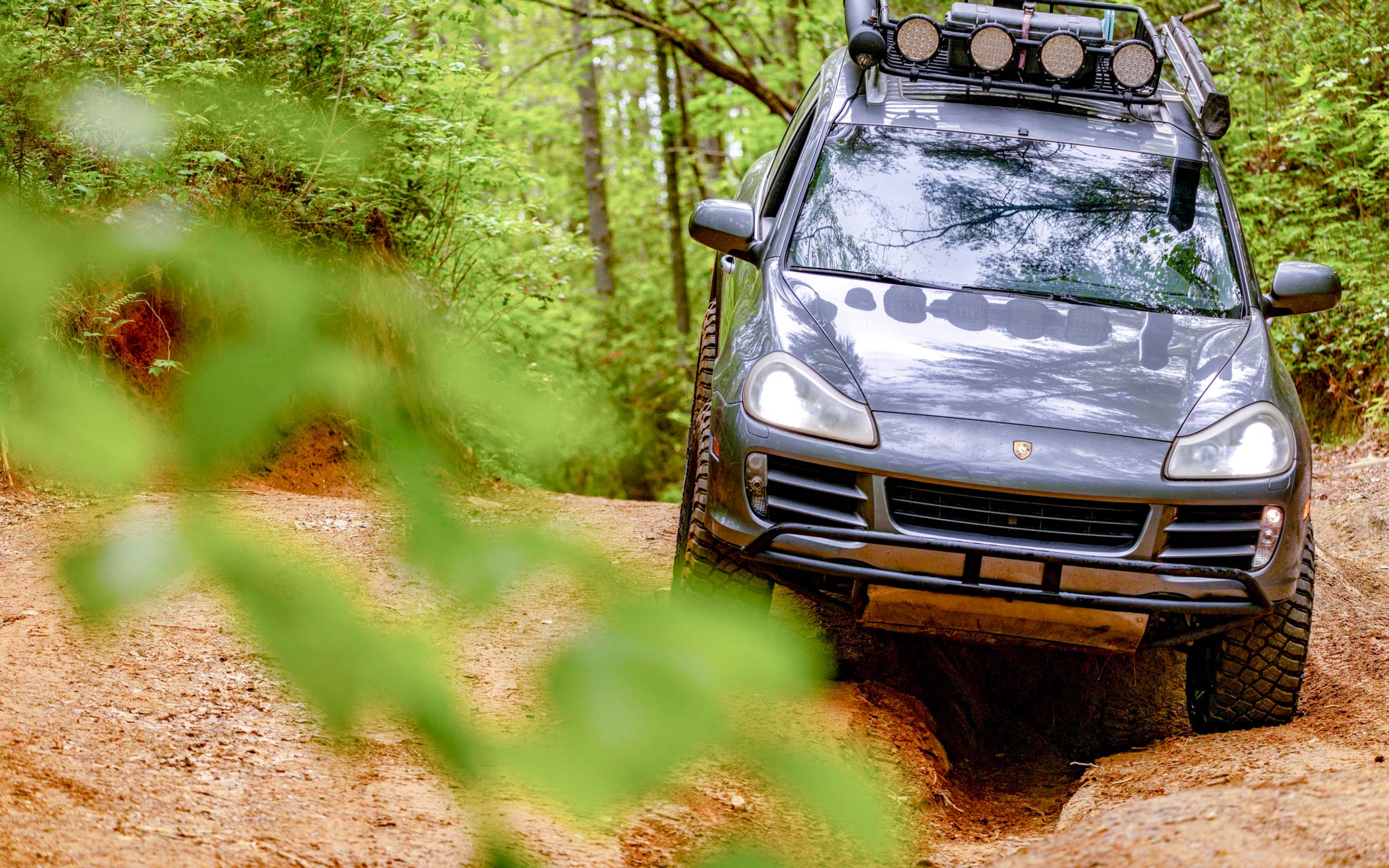
Why Is a Front Bumper Camera Useful on a Pickup or Work Truck?
A front bumper camera is useful when a driver needs to see the area immediately in front of a truck, rather than only the road farther ahead.
The height and shape of a pickup’s hood can make nearby objects difficult to judge from the driver’s seat. A low-mounted camera adds another perspective when approaching curbs, navigating confined work areas, positioning the vehicle on uneven ground, or moving around obstacles.
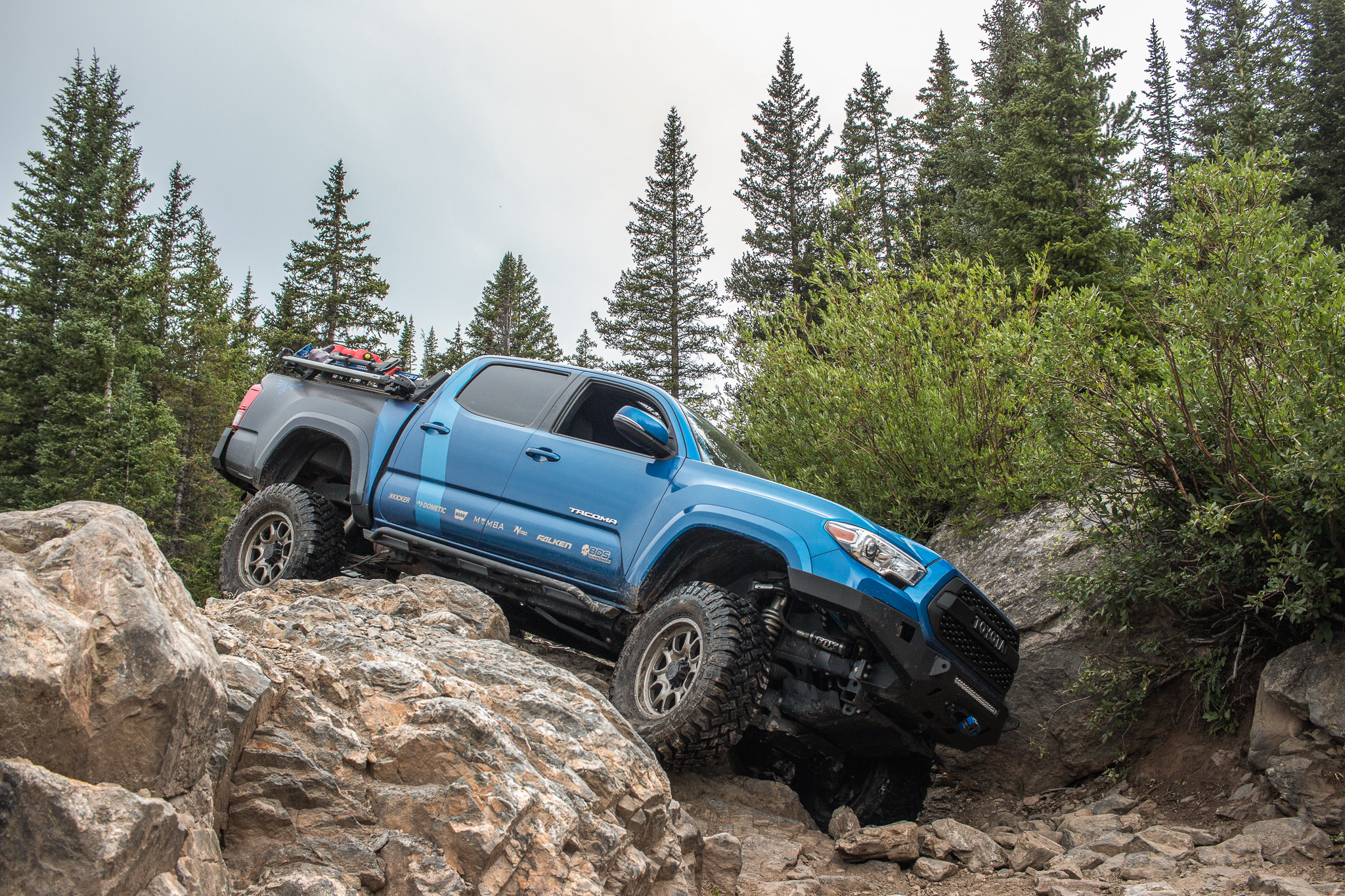
Its value can become even more apparent off pavement. Rocks, dips, ruts, and changes in terrain may sit below the driver’s normal line of sight. Depending on how an exterior camera is installed, it can provide a view around the bumper, wheels, or underbody when navigating those areas.
A bumper camera should still be treated as an additional view rather than a replacement for mirrors, direct observation, or careful driving. Its main benefit is giving the driver another perspective on an area that can otherwise be difficult to judge from a high seating position.
What Matters for Nighttime Dash Cam Recording?
Good nighttime footage depends on more than resolution. Sensor quality and the camera’s ability to manage big differences between light and dark areas can be just as important.
The G900TriPro, for example, uses a Sony STARVIS 2 IMX678 sensor at the front and an OmniVision OS04J10 sensor at the rear, along with HDR across its three-camera arrangement.
This matters because a camera may need to deal with bright headlights, a dark road, illuminated signs, streetlights, and shadows within the same scene. HDR is intended to help manage those differences, rather than simply making the entire image brighter.
For drivers who regularly travel early in the morning, late at night, or along poorly illuminated roads, looking at sensor technology and HDR support can therefore be more useful than comparing resolution figures alone.
Which Everyday Dash Cam Features Are Actually Useful?
A long specification sheet does not necessarily make a dash cam easier to live with. The more useful features are the ones that make footage easier to view, preserve, and retrieve when needed.
A larger display can be particularly helpful in a multi-camera setup, because it gives the driver more space to view rear or exterior camera feeds. The G900TriPro uses a 12-inch IPS touchscreen that functions as a digital mirror display rather than relying on a small standalone dash-cam screen.
GPS is useful for drivers who want location, route, and speed information associated with their journeys. Wi-Fi and app connectivity can simplify footage access, while voice control provides another way to use supported functions without navigating menus on the screen.
Impact detection is another practical feature. A G-sensor can lock relevant footage when an impact is detected, so that it is not immediately overwritten by normal loop recording.
Parking monitoring may also be worth considering if the truck spends time unattended in public parking areas or at work sites. On systems such as the G900TriPro, the appropriate hardwire installation is required to use these parking functions.
Who Benefits Most From a Bumper-Camera Setup?
A bumper-camera system makes the most sense for drivers who have a genuine use for the additional exterior view.
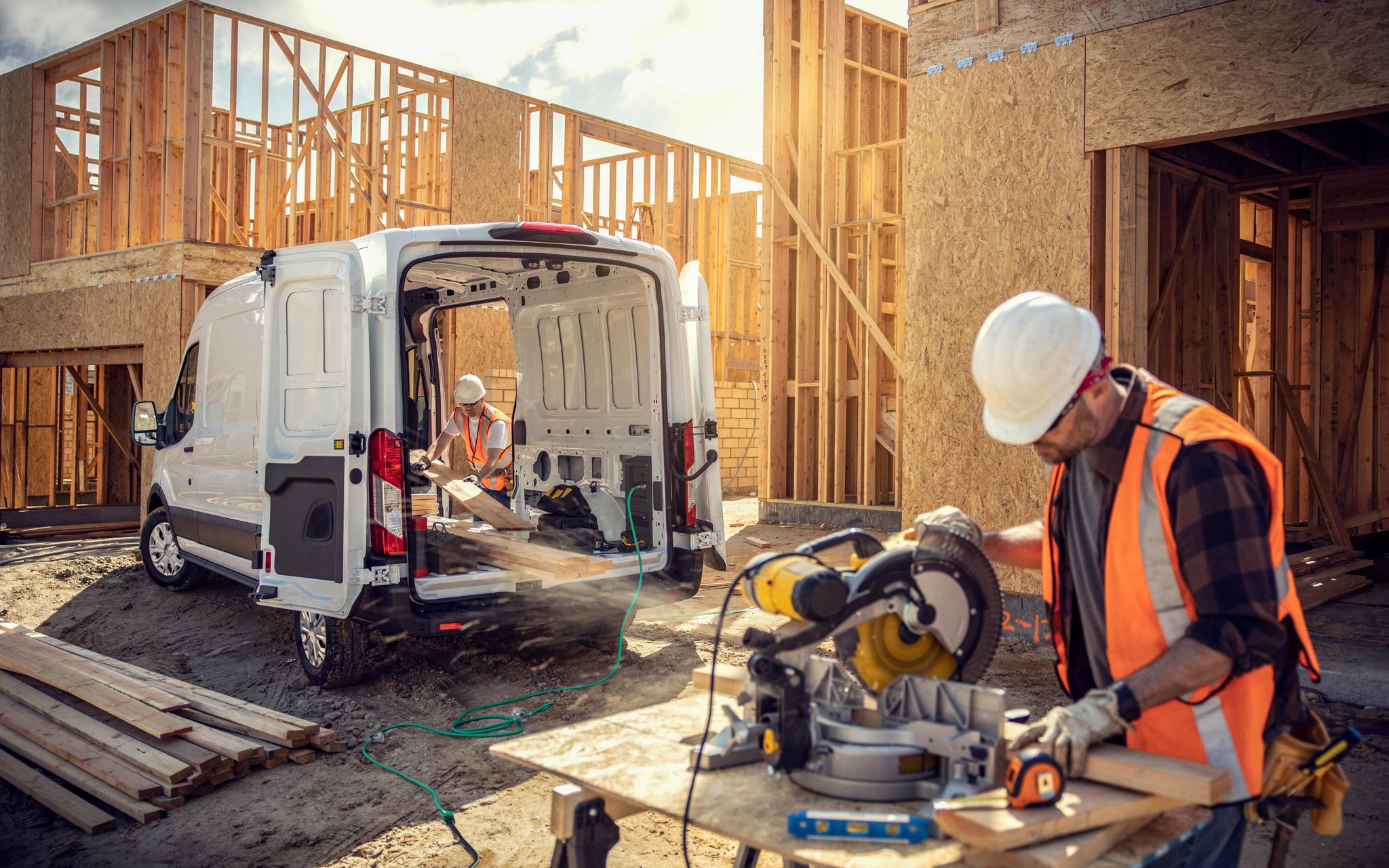
Pickup owners may find it helpful when judging the space immediately in front of a tall vehicle. Work-truck drivers who regularly move through confined job sites can benefit from another close-range perspective, while off-road drivers may use the camera to see terrain that is difficult to judge over the hood.
This is where a product such as the WOLFBOX G900TriPro Bumper Version has a clearly defined audience. Its third camera is not simply there to increase the channel count; it provides a different view from the main front and rear cameras.
However, this configuration is not necessary for everyone. Someone who only wants straightforward accident footage may be adequately served by a conventional front-and-rear system. A rideshare or commercial driver who needs footage from inside the vehicle would be better served by a system with a cabin-facing third camera.
The third channel is worthwhile when it matches a real driving need.
Is a Three-Channel Dash Cam Worth It for a Truck?
A three-channel dash cam can be worth it when the third camera records an area that matters for the way the truck is used.
For a pickup driven on trails, job sites, or in places where close-range front visibility is useful, a front + rear + bumper configuration has a clear purpose. The bumper camera adds a perspective that the normal road-facing cameras cannot provide.
For commercial vehicles carrying passengers, front + rear + cabin may make more sense because the third channel serves a different recording need.
Drivers mainly interested in straightforward road evidence may prefer front + rear recording for a simpler installation.
The number of cameras should therefore follow the use case. Three channels are valuable when each one contributes useful coverage, not simply because three sounds better than two.
Final Thoughts
A good dash cam should fit the way you use your truck, not simply have the longest feature list. Think about where you drive, which areas are hardest to see, and whether you need extra coverage for towing, work sites, parking, or off-road use.
For drivers who need an additional view close to the front of the vehicle, the WOLFBOX G900TriPro Bumper Version offers a practical alternative to a standard front-and-rear setup. The right choice ultimately comes down to useful coverage, dependable recording, and features you will actually use.