

A dash cam can capture what happens in front of your car, but it cannot always tell the whole story. A rear-end collision, a driver following too closely, or an incident developing behind the vehicle may be completely missed by a single front-facing camera.
A dual dash cam records both the front and rear of the vehicle, giving drivers a broader picture of what happened. Having footage from two directions can provide useful context when reviewing an accident, an unexpected road incident, or damage involving a parked vehicle.
But adding a second camera does not automatically make a dash cam better. Video resolution, sensor quality, low-light performance, storage, parking features, and rear-camera quality all play a part. Knowing which specifications actually matter can help you choose a system that produces clear, useful footage – instead of simply having a long feature list.
What Is a Dual Dash Cam and How Does It Work?
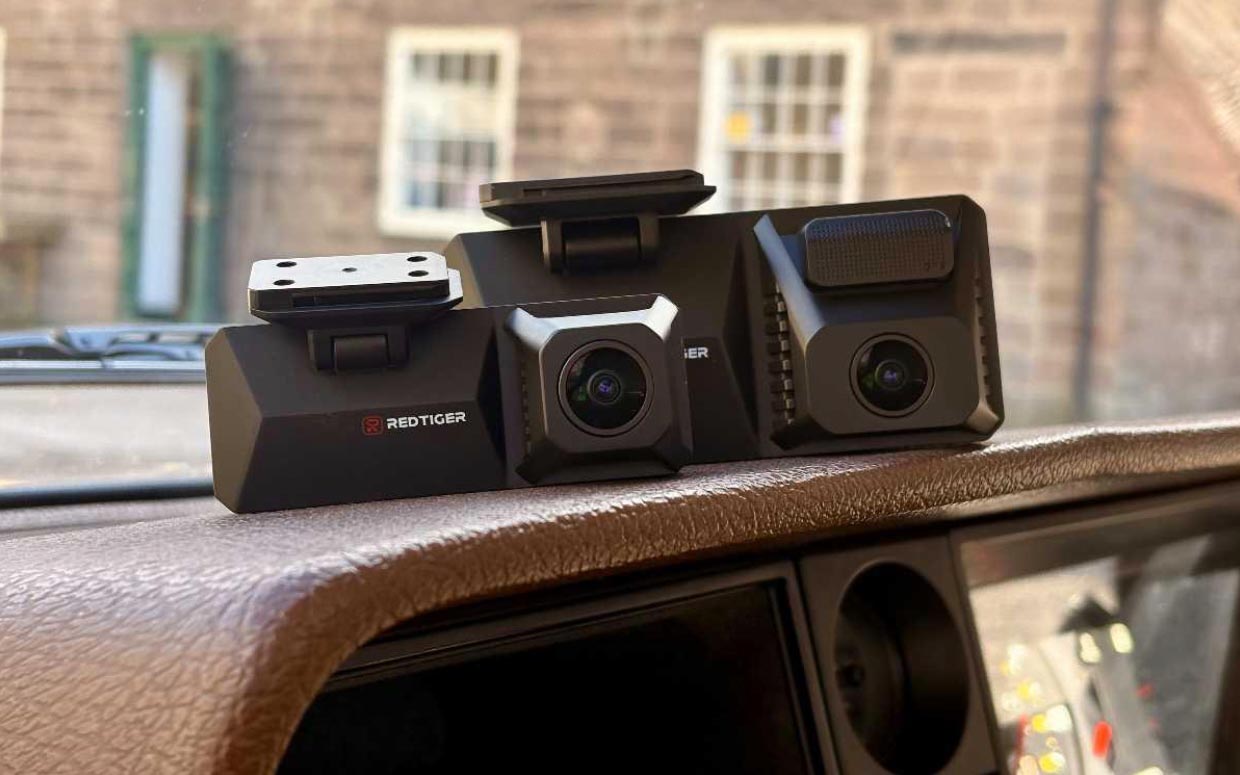
A dual dash cam is a two-channel camera system that records the road ahead and the area behind the vehicle at the same time. It is useful for drivers who want footage from both directions instead of relying only on a front-facing view.
The main camera is normally mounted near the top of the windshield, while a second camera is positioned at the rear. Both video feeds are managed by the same system and stored for later review.
This setup can provide important context during an incident. If another vehicle approaches from behind, follows too closely, or makes contact with the rear of the car, the rear camera may capture details that are outside the front camera’s field of view.
For commuters, highway drivers, road-trip travelers, and people who spend significant time behind the wheel, recording two directions can provide a more complete visual record of a journey.
What Makes a Good Front and Rear Dash Cam?
A good front and rear dash cam should provide clear recording from both cameras, reliable low-light performance, sufficient storage, and practical features for accessing and protecting important footage.
It is important to examine the specifications of both cameras separately. Some systems promote 4K recording prominently, even though only the front camera records at that resolution. The rear camera may be limited to 1080p or another lower resolution.
That difference matters because an incident can happen in either direction. A rear camera should not be treated simply as an extra feature. Its resolution, sensor, field of view, and night performance can directly affect the usefulness of the footage it captures.
Features such as HDR, GPS, wireless file transfer, loop recording, and parking monitoring can also make a system more practical, but they should support strong recording hardware rather than compensate for weak image quality.
How Important Is Video Resolution in a Dual Dash Cam?
Video resolution determines how much visual information is captured in each frame. Higher-resolution footage can preserve more detail, which becomes useful when reviewing road signs, surrounding vehicles, and other small elements in a recording.
Full HD 1080p may be enough for general road coverage, while 2K and 4K recording provide significantly more pixels. The extra detail can be particularly useful when footage needs to be enlarged or examined closely after an incident.
Resolution should not be considered on its own, however. Sensor quality, exposure control, lighting conditions, motion, and image processing all influence the final result.
Rear resolution deserves the same attention as front resolution. A system with a 4K front camera and a 1080p rear camera creates a noticeable difference in the amount of visual information captured from each direction. Drivers who place equal importance on front and rear evidence may prefer a system capable of high-resolution recording on both channels.
Is 4K Recording Worth It for Both Front and Rear Cameras?
4K recording on both cameras can be valuable for drivers who want a high level of detail from the front and rear of the vehicle. It is particularly relevant for frequent highway driving, longer road trips, and situations in which footage may need to be examined closely.
A 3840 × 2160 recording contains considerably more image information than a 1920 × 1080 Full HD recording. This gives the camera more visual data to preserve within each frame.
Higher resolution does not guarantee that every license plate or small detail will always be readable. Distance, vehicle speed, rain, reflections, darkness, glare, and camera positioning can all affect the recording.
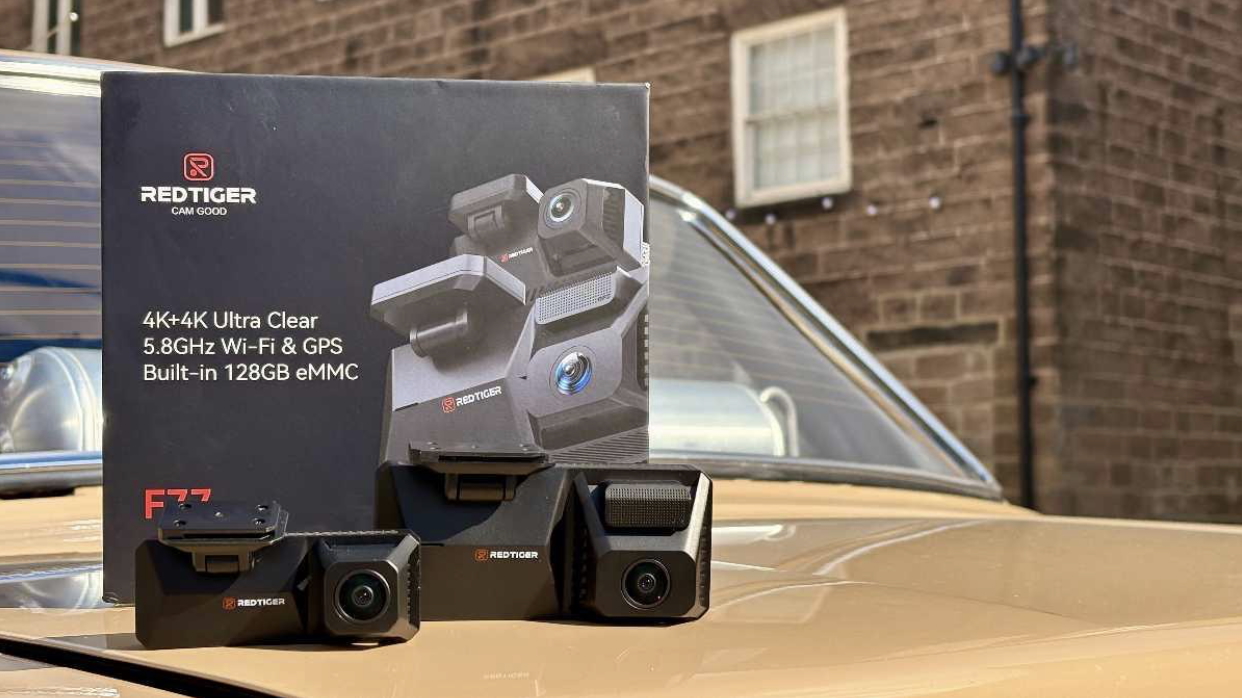
One example of a system built around high-resolution coverage in both directions is the REDTIGER F77, which uses Sony IMX678 image sensors in the front and rear cameras and supports 3840 × 2160 recording on both channels.
Which Dual Dash Cam Is a Good Choice for 4K Front and Rear Recording?
The REDTIGER F77 is a suitable option for drivers who prioritize high-resolution footage from both cameras. It is particularly relevant for drivers who do not want the rear channel to drop to a much lower resolution than the front.
Its key specifications include:
- 3840 × 2160 front recording
- 3840 × 2160 rear recording
- Sony IMX678 image sensors in both cameras
- Sony STARVIS 2 imaging technology
- HDR support on the front and rear cameras
- 128GB or 256GB built-in eMMC storage options
- 5.8GHz Wi-Fi connectivity
- 4-inch IPS touchscreen
- GPS tracking
- Voice control
- Loop recording
- Parking monitoring with the required hardwire connection
The combination of matching 4K recording and Sony IMX678 sensors gives both channels a strong imaging foundation rather than concentrating the higher-end hardware only at the front. STARVIS 2 and HDR also help the cameras manage scenes containing a mixture of bright and dark areas.
Built-in eMMC storage is another practical feature. The available 128GB and 256GB configurations provide integrated recording space, while 5.8GHz Wi-Fi makes it easier to access and transfer large video files through a compatible smartphone connection.
For someone specifically comparing two-channel cameras on recording quality, storage, and ease of accessing footage, these are more meaningful specifications than a 4K label by itself.
What Should You Look for in a Dash Cam for Night Driving?
For night driving, sensor quality and HDR capability deserve as much attention as recording resolution. A camera needs to deal with dark surroundings and strong light sources such as headlights, illuminated signs, and streetlights – within the same scene.
HDR can help balance brighter and darker areas of an image so that one part of the scene does not overwhelm the rest. A capable low-light sensor can also preserve more useful visual information when there is limited ambient light.
A useful way to compare cameras is to check whether low-light imaging technology is available on both channels. Strong night performance at the front is less helpful if the rear camera struggles whenever lighting becomes difficult.
No camera can eliminate every challenge associated with nighttime recording. Rain, dirty glass, glare, distance, and vehicle movement can still affect clarity, so good low-light hardware should be viewed as an advantage rather than a guarantee that every small detail will remain readable.
Why Does Rear-Camera Quality Matter?
Rear-camera quality matters because footage from behind may become the main record of an incident involving a vehicle approaching or making contact from the rear.
A basic rear camera may show the general sequence of an event, but greater resolution and a capable image sensor can preserve more information about surrounding vehicles and road conditions.
This makes it worth checking the rear camera’s specifications separately. Resolution, sensor quality, low-light performance, field of view, and mounting position can all affect what appears in the final footage.
Installation requirements should also be checked before buying. Some rear cameras are designed for mounting inside the rear window, while others may support exterior installation. The correct option depends on the camera’s design and the type of vehicle.
How Much Storage Does a 4K Dual Dash Cam Need?
A 4K two-channel camera generally needs more storage than a lower-resolution system because it records two high-resolution video feeds. Larger capacity allows more footage to remain available before older standard recordings are overwritten.
Loop recording helps manage storage automatically. Once available recording space becomes full, the system can replace older ordinary clips with new ones so that recording continues without requiring the driver to clear files after every journey.
Storage requirements also depend on recording bitrate, clip length, compression, and the amount of time spent driving. Someone who drives for several hours each day will generally benefit more from larger storage capacity than someone who uses a vehicle only for short local trips.
It is worth checking whether a camera includes built-in storage, requires a memory card, or supports both. Buyers should also confirm the maximum supported capacity before purchasing additional storage.
Is Fast Wi-Fi Important in a Dash Cam?
Fast Wi-Fi can be useful for drivers who regularly review, save, or transfer recordings to a smartphone. The benefit becomes more noticeable with high-resolution footage because 4K video files can be considerably larger than standard Full HD clips.
Wireless connectivity can make it possible to open recordings through a companion app instead of removing a memory card or connecting the camera directly to another device.
This can be particularly convenient immediately after an incident when a driver wants to review a clip or save an important recording.
Wi-Fi does not improve the original image quality, however. It should be considered a convenience feature rather than a replacement for good sensors, reliable recording, or adequate storage.

Should a Good Dual Dash Cam Have GPS?
GPS is useful for drivers who want additional journey information associated with their recordings. Depending on the camera and software, recorded GPS data may include route, location, and vehicle speed information.
This extra context can help when reviewing where a particular recording was made or reconstructing part of a journey.
GPS may not be essential for someone who only wants straightforward front and rear video. Frequent travelers, professional drivers, and people covering longer distances may find it more useful.
It should still remain a supporting feature. Clear and reliable video is the primary purpose of the camera, while GPS adds another layer of information to the recording.
What Is Parking Mode and Is It Worth Having?
Parking mode allows a compatible camera to provide monitoring when the vehicle is parked rather than recording only while the car is being driven.
It can be useful for vehicles regularly left in public parking lots, shared garages, street parking, or other places where bumps and unexpected incidents may happen while the driver is away.
The exact operation varies between systems. Some cameras can respond to detected impacts or movement, while more advanced parking configurations may support longer monitoring periods or different recording modes.
Power requirements are particularly important. Parking monitoring commonly requires a hardwire kit or another compatible power solution so the camera can operate after the vehicle has been switched off. Buyers interested in parking coverage should check these requirements before installation.

Are Voice and Touch Controls Useful on a Dash Cam?
Voice and touchscreen controls can make a dash cam easier to operate, although they should come after recording quality when comparing systems.
A touchscreen can simplify common tasks such as navigating menus, changing settings, and reviewing recordings while the vehicle is stationary. Voice controls can provide access to supported functions without requiring the driver to reach for the camera.
These features become more valuable when the camera is used regularly. A system may remain installed for years, so straightforward controls can make routine tasks less frustrating.
They should still be treated as convenience features. Strong recording hardware, reliable storage, and useful footage remain more important than the way the menus are controlled.
Who Benefits Most From a Dual Dash Cam?
Drivers who want a broader record of what happens around their vehicle are likely to benefit most from a two-channel system. Daily commuters, highway drivers, road-trip travelers, and people who regularly drive in busy traffic can all gain additional coverage from a rear camera.
A two-camera setup is particularly useful when an incident develops behind the vehicle. Instead of relying on front footage to provide indirect context, the rear channel records the direction from which the event is occurring.
Drivers who frequently park in busy areas may also value having front and rear coverage when the camera supports an appropriate parking-monitoring setup.
For anyone comparing systems, the important point is to consider the quality of both channels rather than assuming that adding a rear camera automatically provides equally useful footage.
How Do You Choose the Right Dual Dash Cam?
Choosing the right system starts with understanding which recording situations matter most for your driving habits.
For basic commuting, reliable front and rear recording with loop recording and adequate storage may cover the essentials. Frequent nighttime drivers should pay closer attention to image sensors and HDR. Drivers who spend considerable time on highways or want more detail for reviewing footage may place greater importance on 4K recording.
Storage becomes more important as resolution increases. Recording two high-resolution video streams creates more data, so available capacity and file-management options should be part of the comparison.
It is also worth considering everyday usability. Wi-Fi can simplify file transfers, GPS can add journey information, and parking monitoring can extend coverage beyond normal driving.
Before choosing a system, compare the front and rear resolution, sensor models, low-light technology, storage, connectivity, GPS availability, parking requirements, mounting limitations, and controls.
The most suitable camera is not necessarily the one with the longest specification sheet. It is the system whose recording capabilities and practical features fit the way you actually use your vehicle.
Final Thoughts…
A good dash cam should give you useful footage without making everyday use complicated. Clear front and rear recording, dependable performance in different lighting conditions, and easy access to saved clips matter far more than having a long list of features.
Before choosing one, think about how and where you drive most often. The right setup is the one that provides the coverage and recording quality you actually need, while remaining simple enough to rely on every time you get behind the wheel.