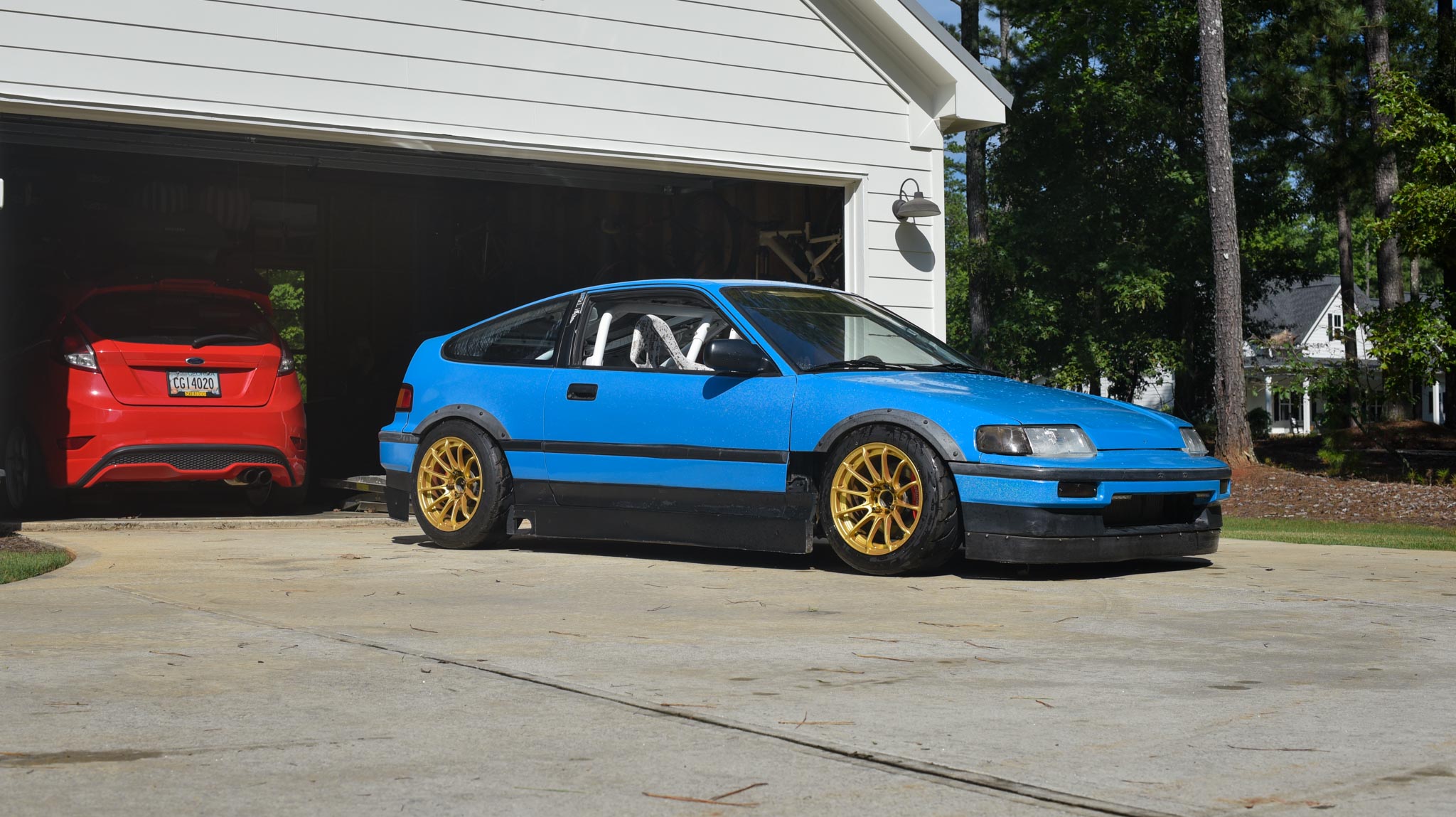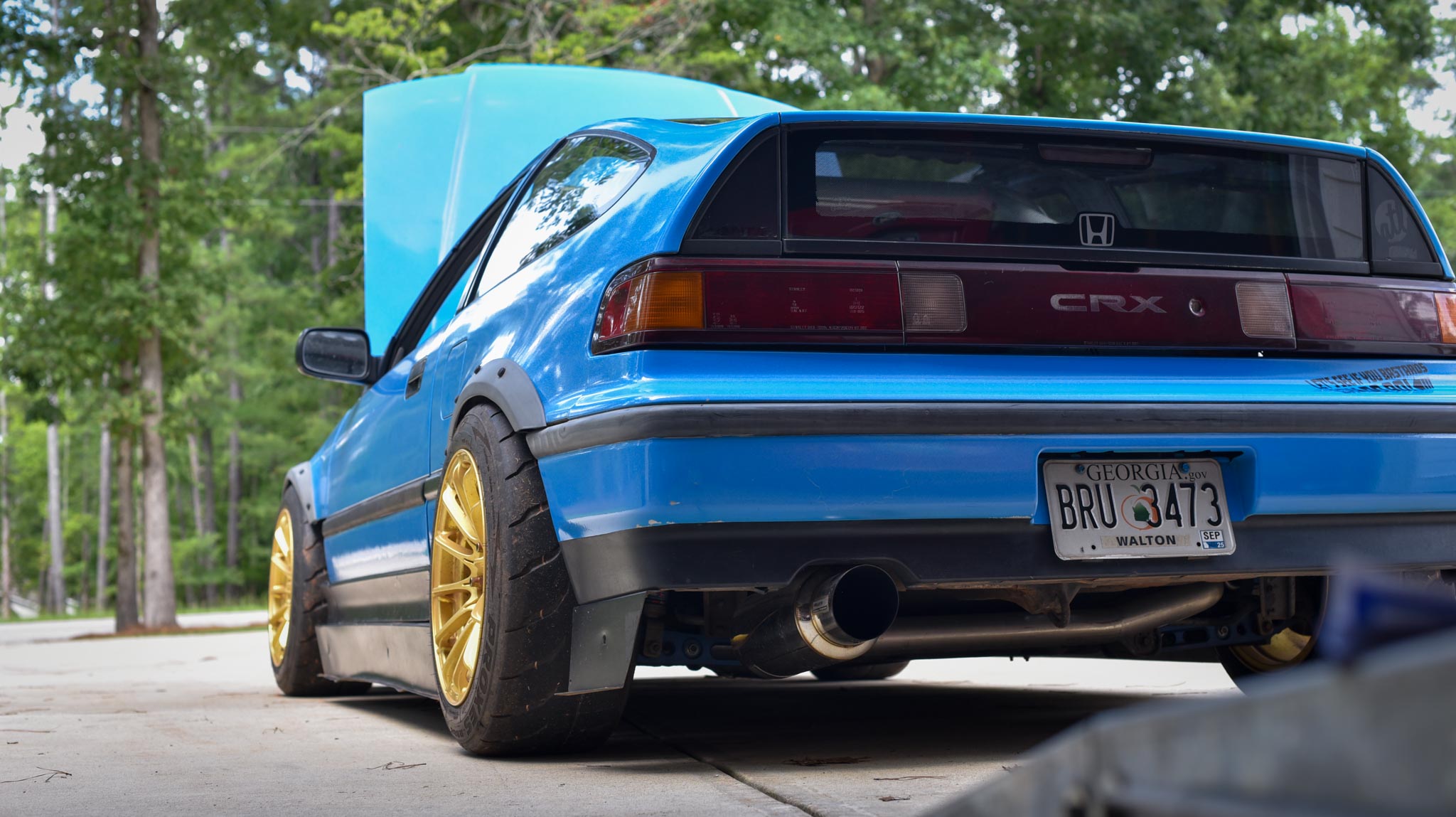


It seems weird, but even with all the recent battery innovation in the tech & automotive industries, your basic lead-acid automotive battery has not changed much. Except for the price… which has more than doubled. Lead-acid car batteries are bulky, heavy, corrosive, and expensive. Luckily for the enthusiast, racer, customizer, & collector… there are now better options. Cue-in the E3 lithium battery. Lithium batteries have some solid advantages (and a couple drawbacks)… which I’ll explain using my Honda CRX.
-

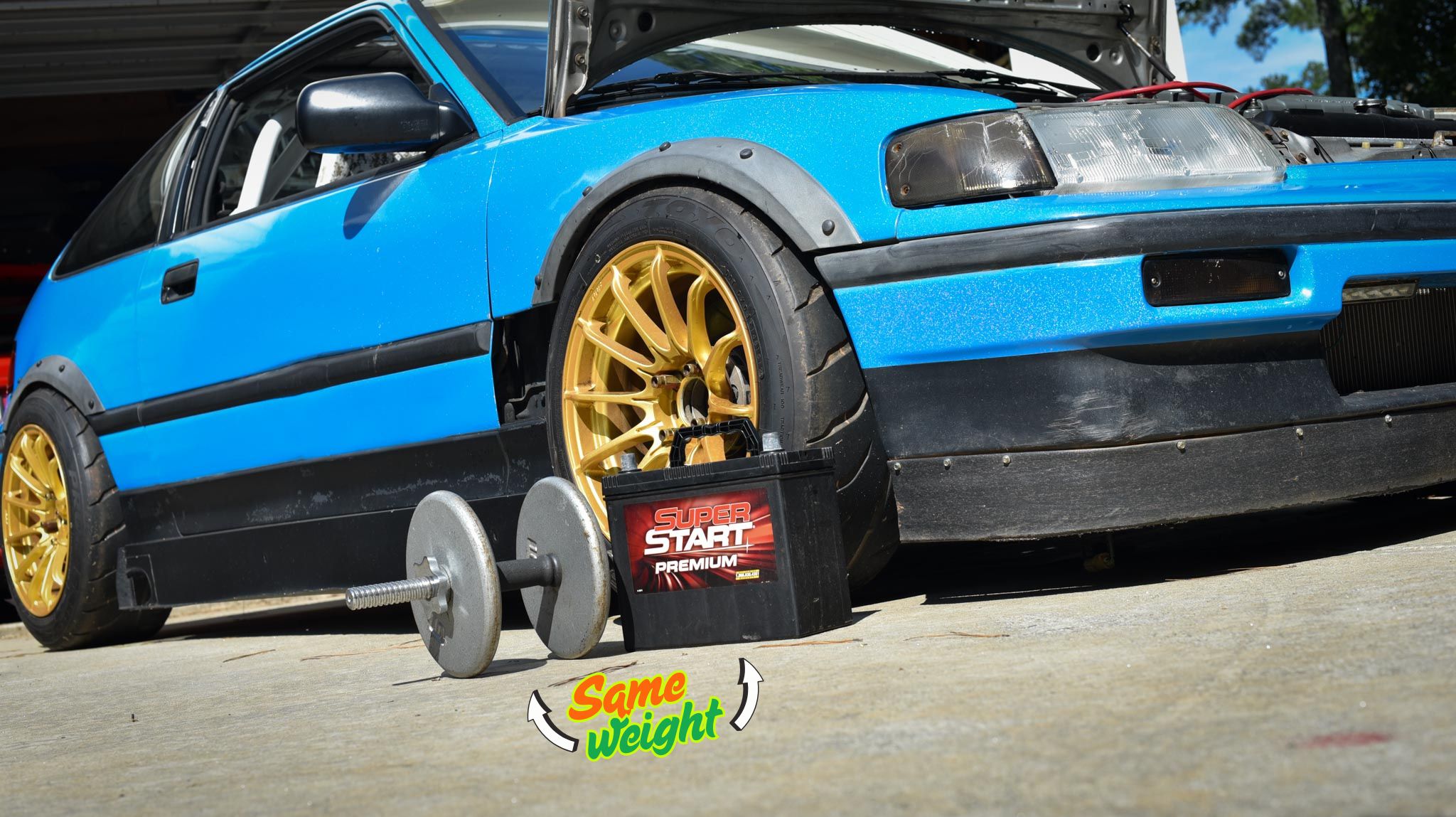
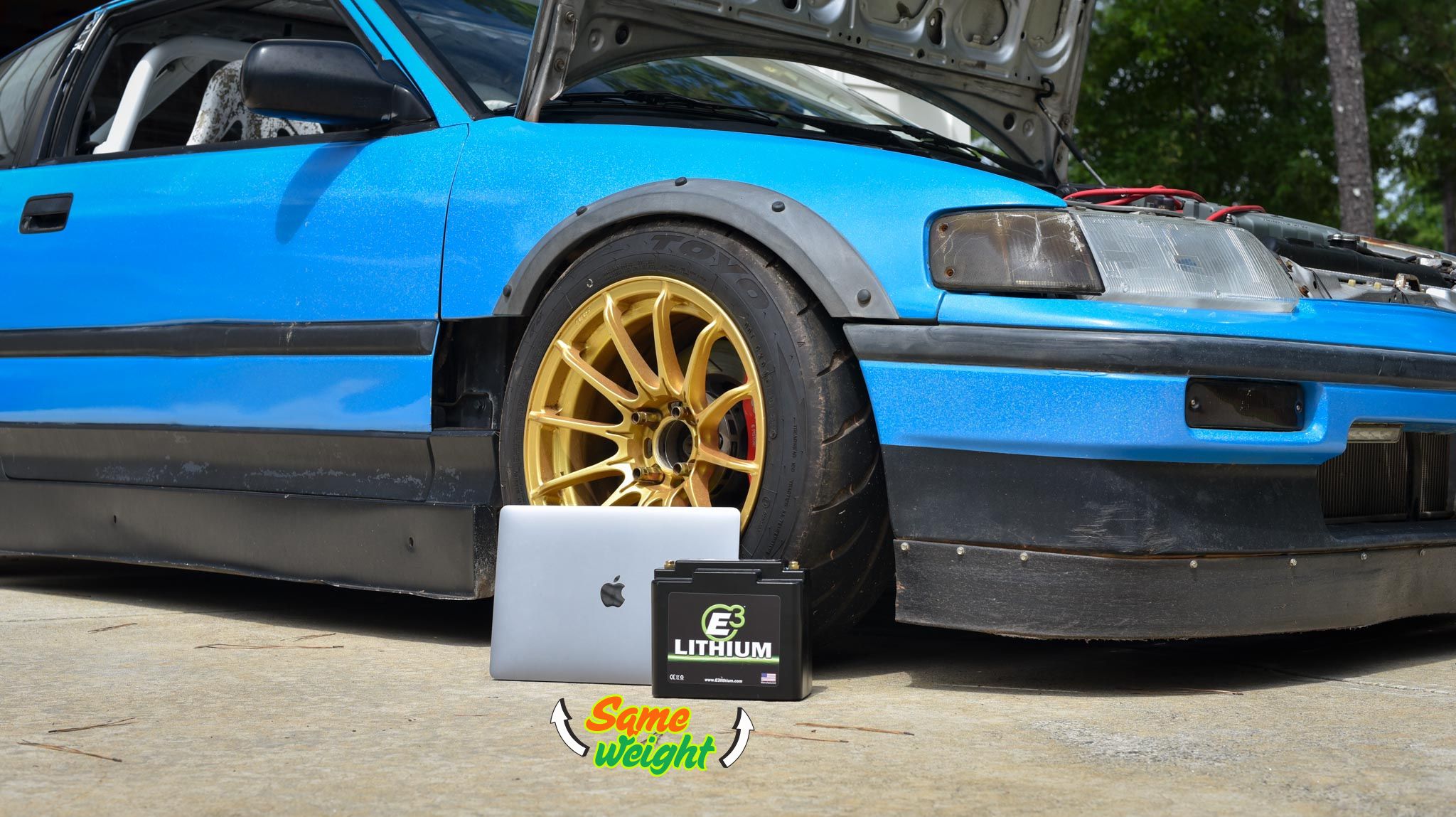
- A typical battery weighs more than a bike…
-
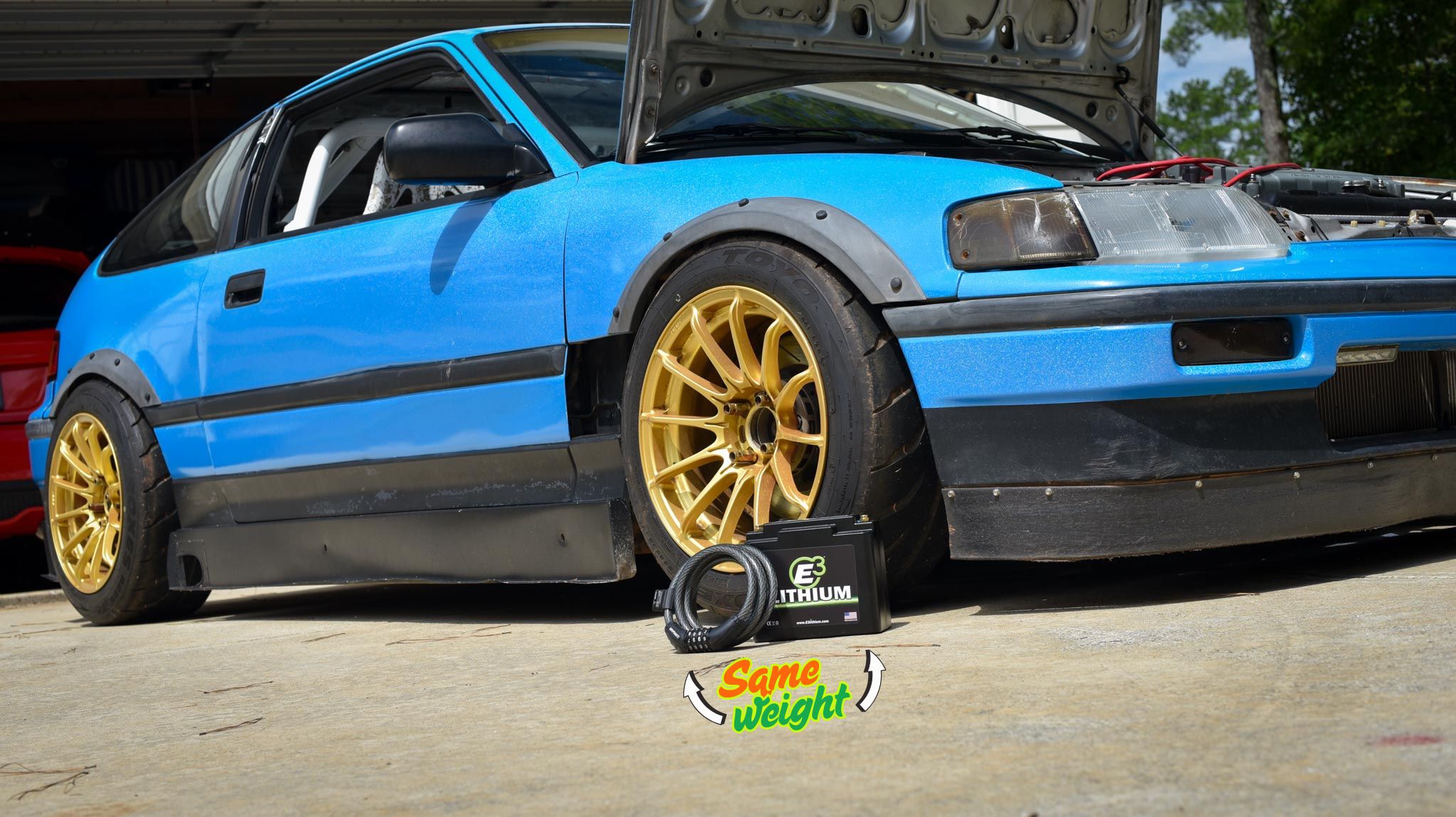
- The E3 Lithium battery weights less than a bike lock.
ADVANTAGES TO AN E3 LITHIUM BATTERY…
Lightweight…
Depending on what car you drive, an E3 lithium battery will easily be 25-to-40 pounds lighter than your standard battery. For example, this battery (the E3.401 model) weighs only 3 pounds!! There are basically 2 ways to improve performance. 1) You can increase power. And/or 2) You can reduce weight. ‘More power’ is the American way lol. BUT – it catches the next weak link, and fatigues other components of your vehicle harder. For example, you need a beefier chassis/suspension to handle more power, wider tires to grip it… and bigger brakes to slow it down. Everything has to be MORE… and it’s a strategy that often works against itself (that’s why Miatas eat “faster cars” on racetracks). Leaning-out your car has the same effect as adding horsepower… but without the drawbacks of MORE. Lightweight has no disadvantage. It unleashes the full potential of your car, your brakes, your tires… everything works better when it doesn’t have to work as hard! For example…



My Honda CRX…
Is built around the concept of lightweight performance – of doing more with less. This car doesn’t make a bunch of power, but it revs high & it doesn’t weigh squat. And that makes for a razor sharp, raw, connected driving experience. Every pound matters. I’ve literally spent days chiseling-out all the factory sound-deadening just to save 10lbs. So how valuable is it to get a quick-&-easy 25-pounds off the nose of this CRX by replacing the battery?? Very!
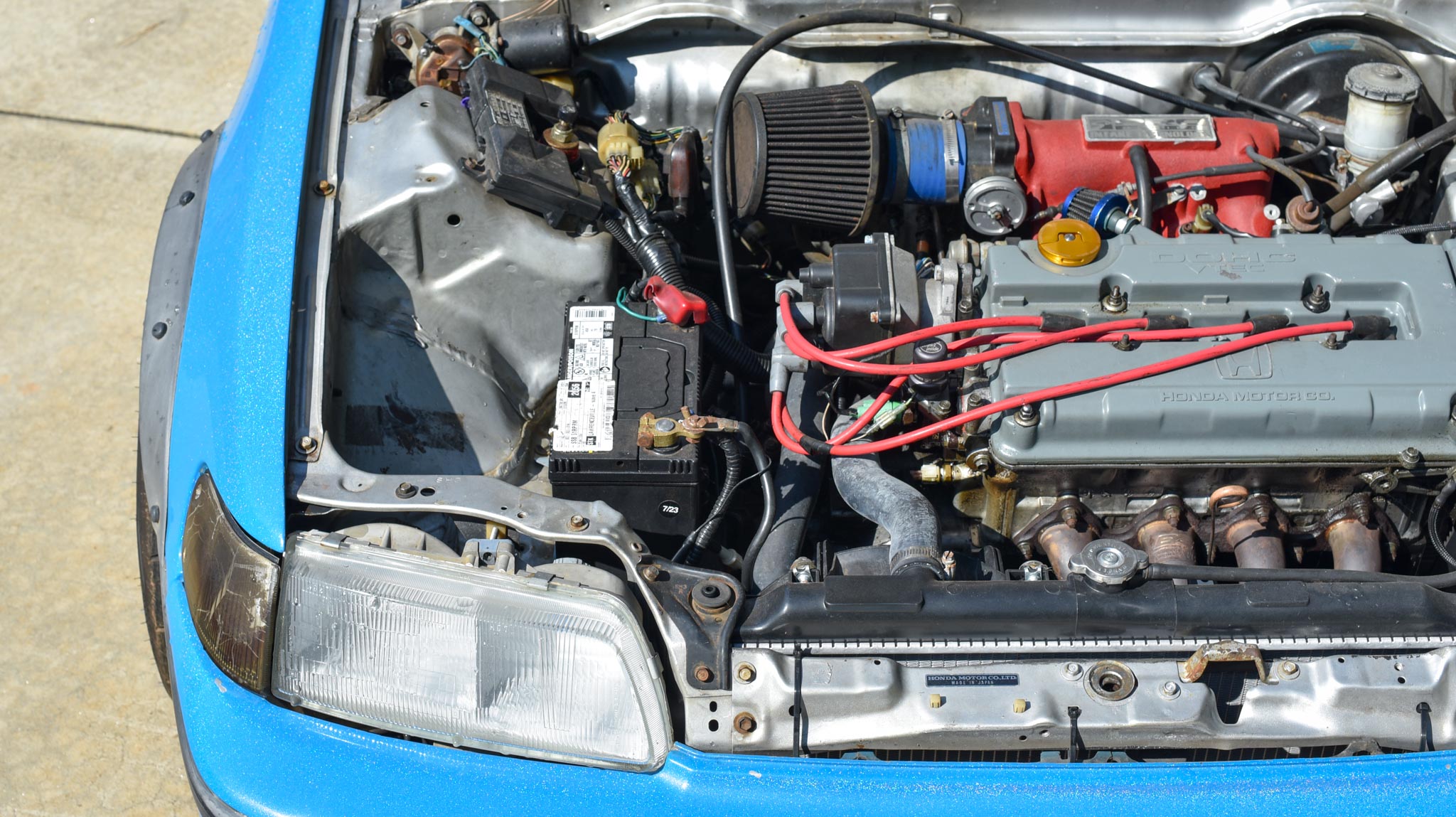
Before…

After…
Chris LaCouture is an engineer at E3 Spark Plugs…
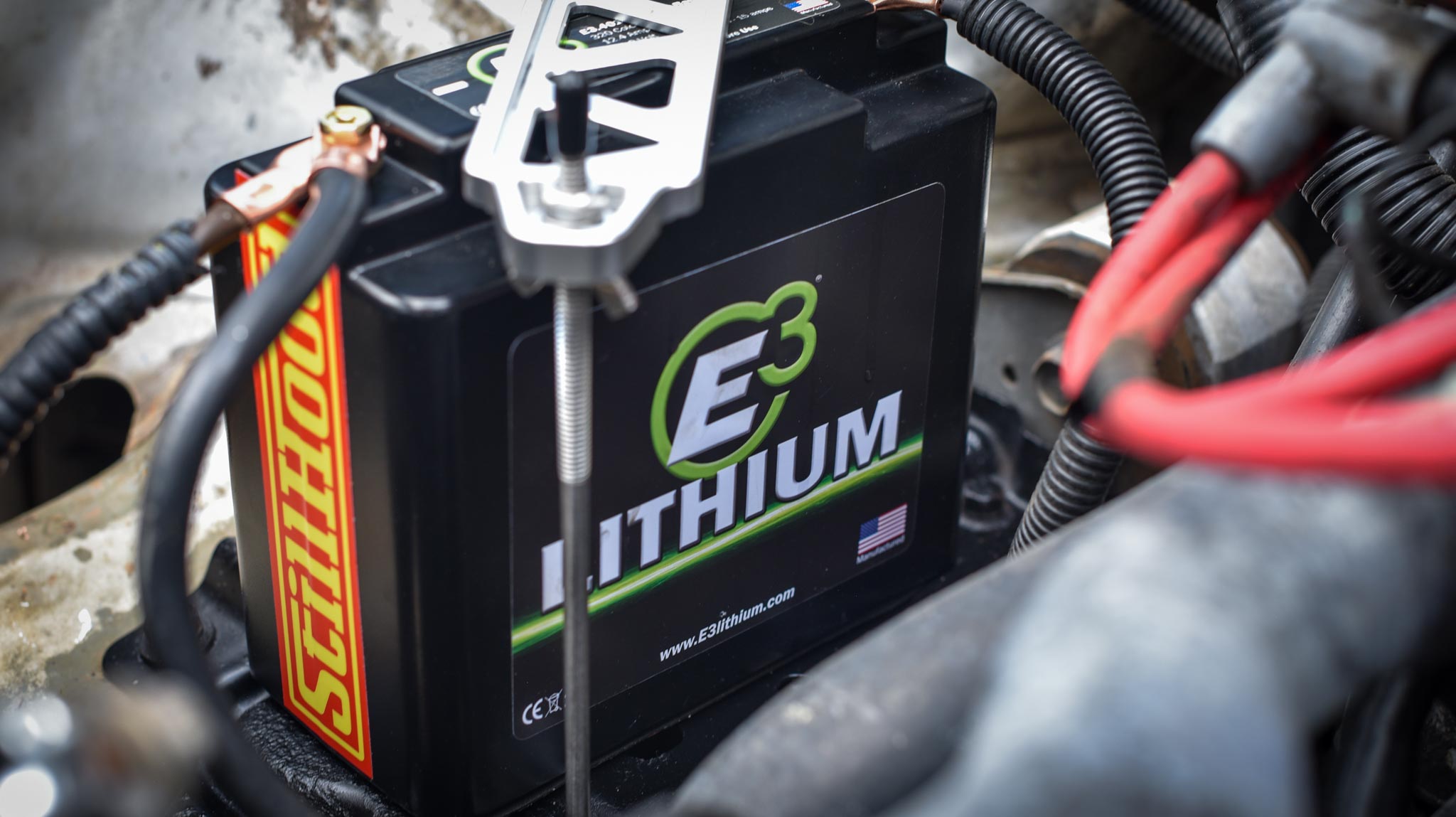
And a longtime friend. The way we figured, this CRX has a small engine (B16) with minimal electronics. Hell… I could practically kickstart it lol. It doesn’t need the biggest battery. Therefore we chose the #E3.401. It’s one of the lightest E3 lithium batteries, and also one of the less expensive ones at $350. That means it’s only about $150 more than a typical parts store replacement battery. Except it’s 3-pounds VS 30-pounds. And – there are more benefits than just weight…


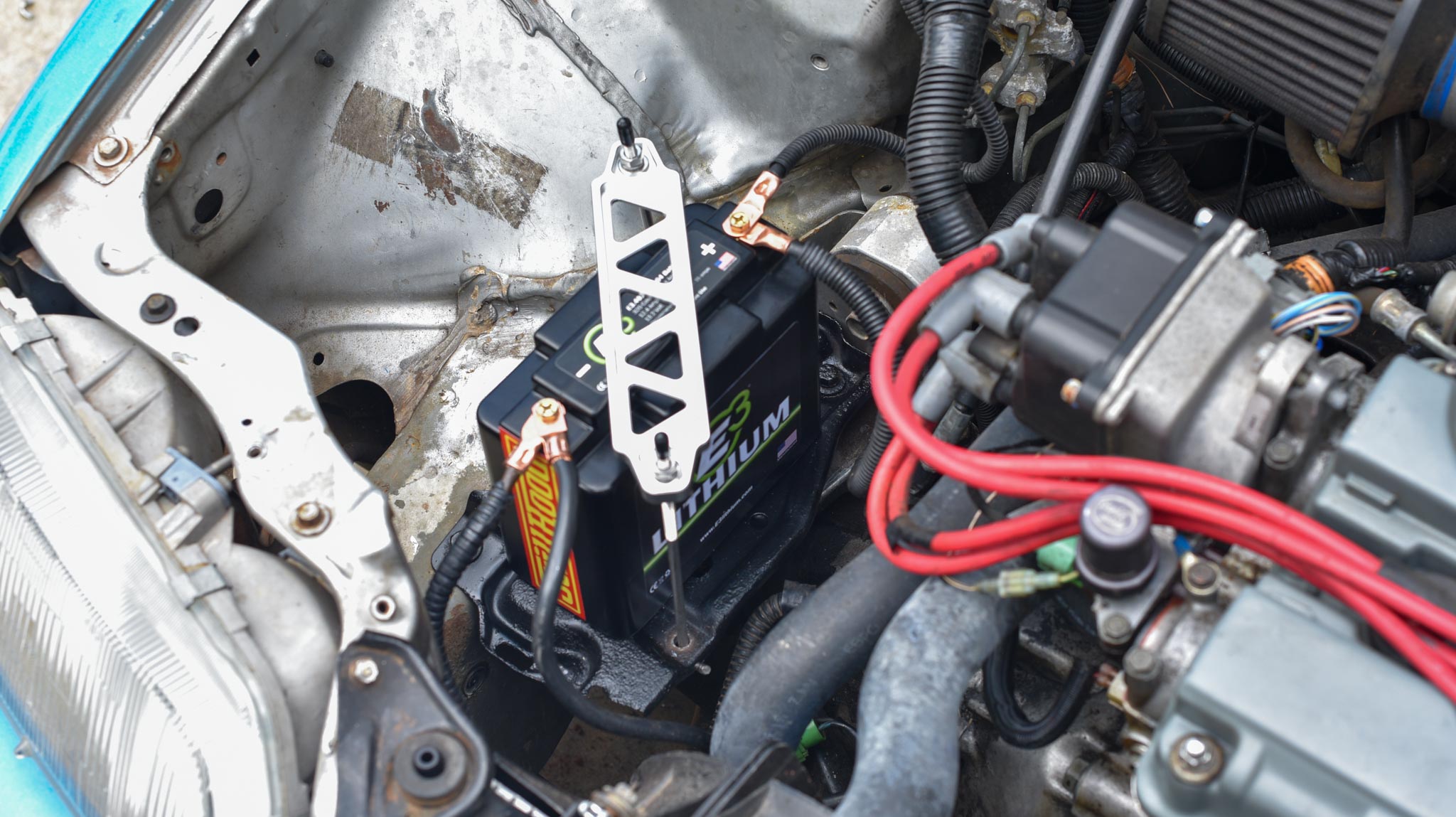
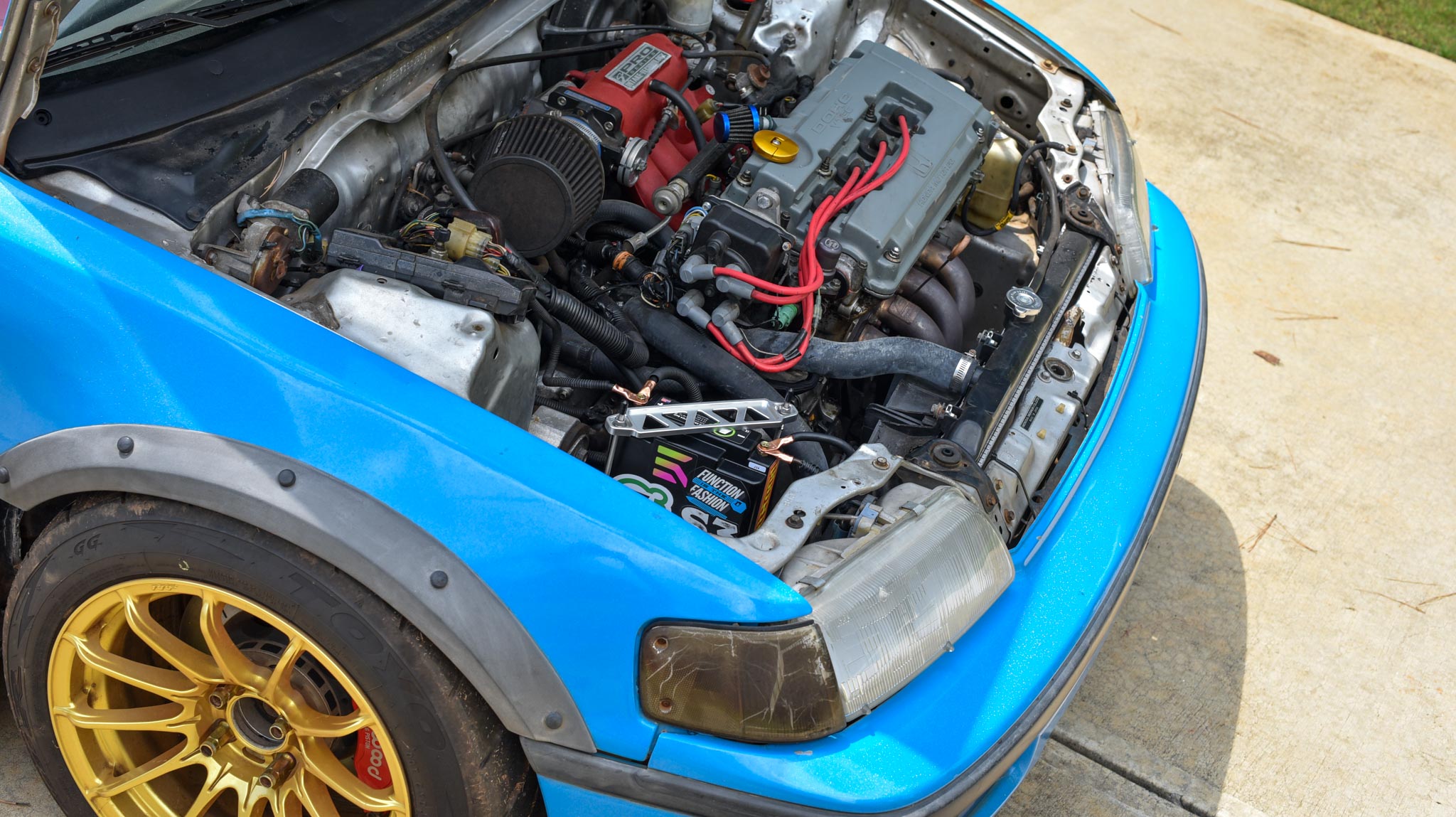
Mount it anywhere…
The compact size of an E3 Lithium battery opens-up more freedom in mounting options. These batteries can be installed vertically, flat, sideways, upside-down (in fender wells, under the dash, etc)… however you want to do it. My CRX is flashy, but sadly, it’s not a show car lol. Easy serviceability is key for me, so I put the battery in the original location where it’d be easy to access. However, if you’re working on a clean/tucked engine bay, an E3 lithium battery is the perfect option where function meets fashion.
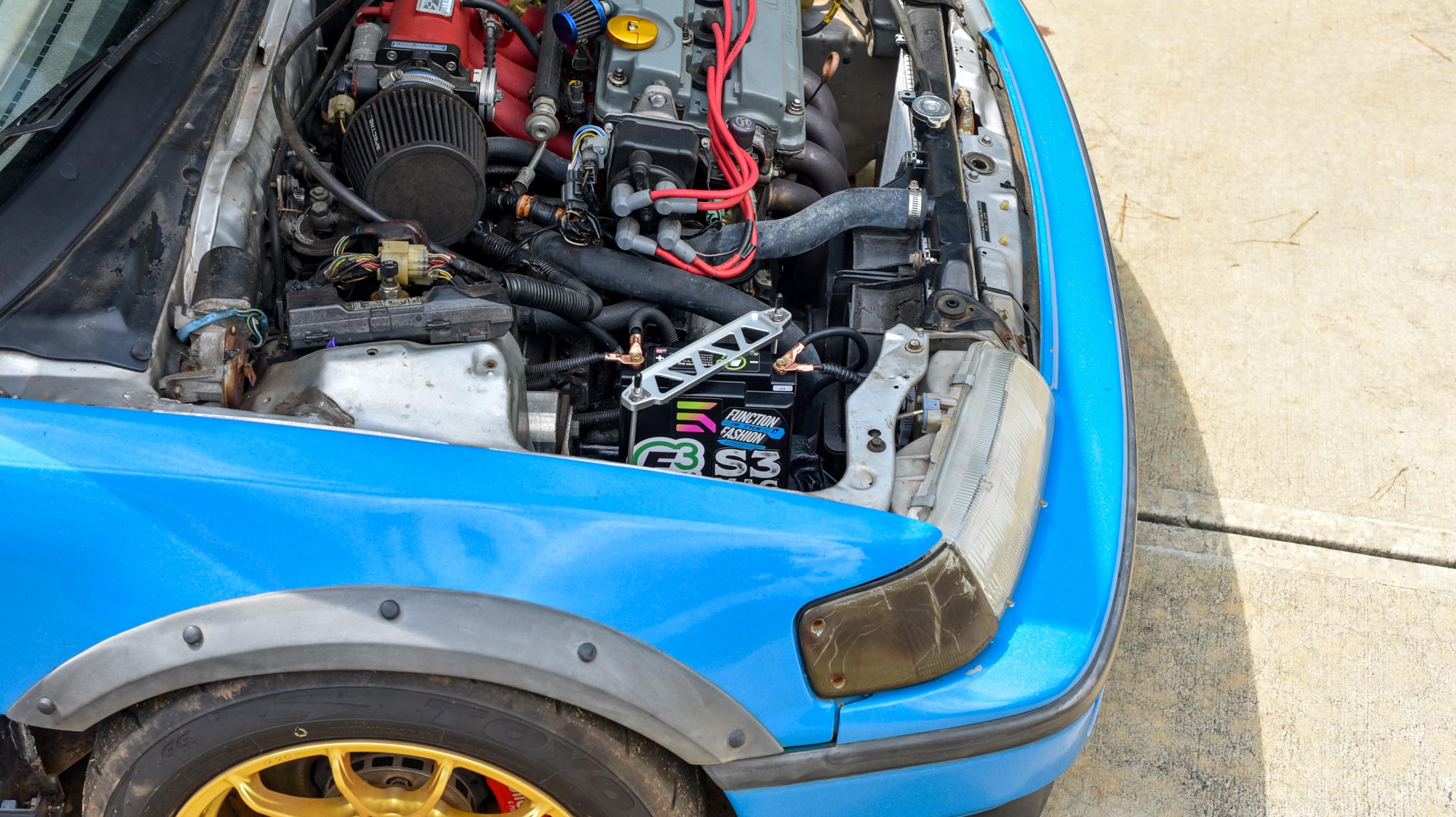
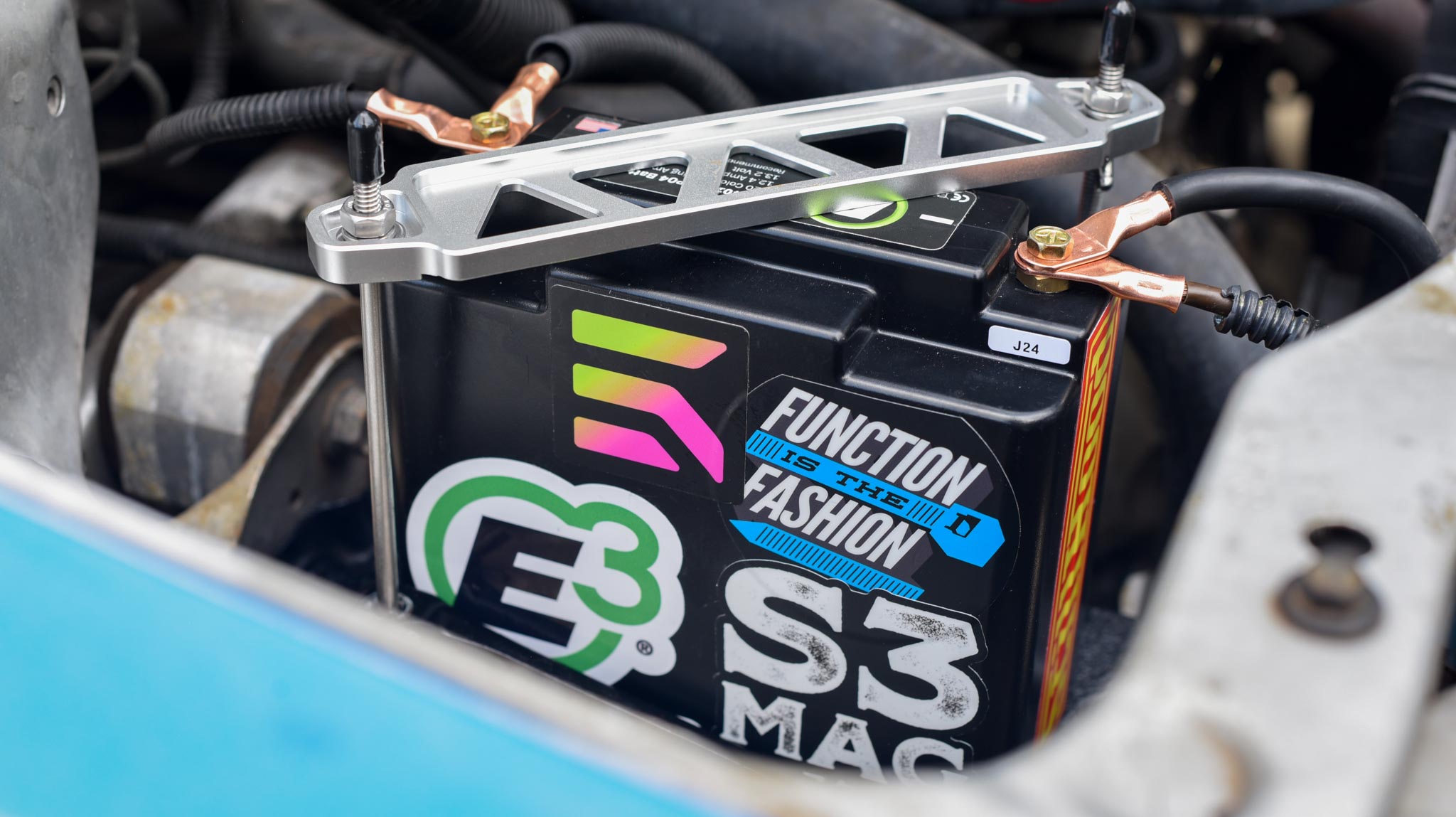
Quicker starts…
The E3 lithium battery will give you noticeably quicker, punchier starts. You’re probably used to rating car batteries according to their cold cranking amps (CCA), which is honestly kind of mistaught unless you’re starting it a 0°F. Living in the South, I’m not doing anything at 0°F, and definitely not trying to start this CRX lol. Shop by peak cranking amps instead (and/or pulse cranking amps). And know that lithium batteries pack a lot more punch in smaller, lighter packages. For instance this #E3.401 E3 battery with just 320cca & 680pca… starts my CRX with noticeably more vigor than the 450cca lead-acid battery that came out of it.
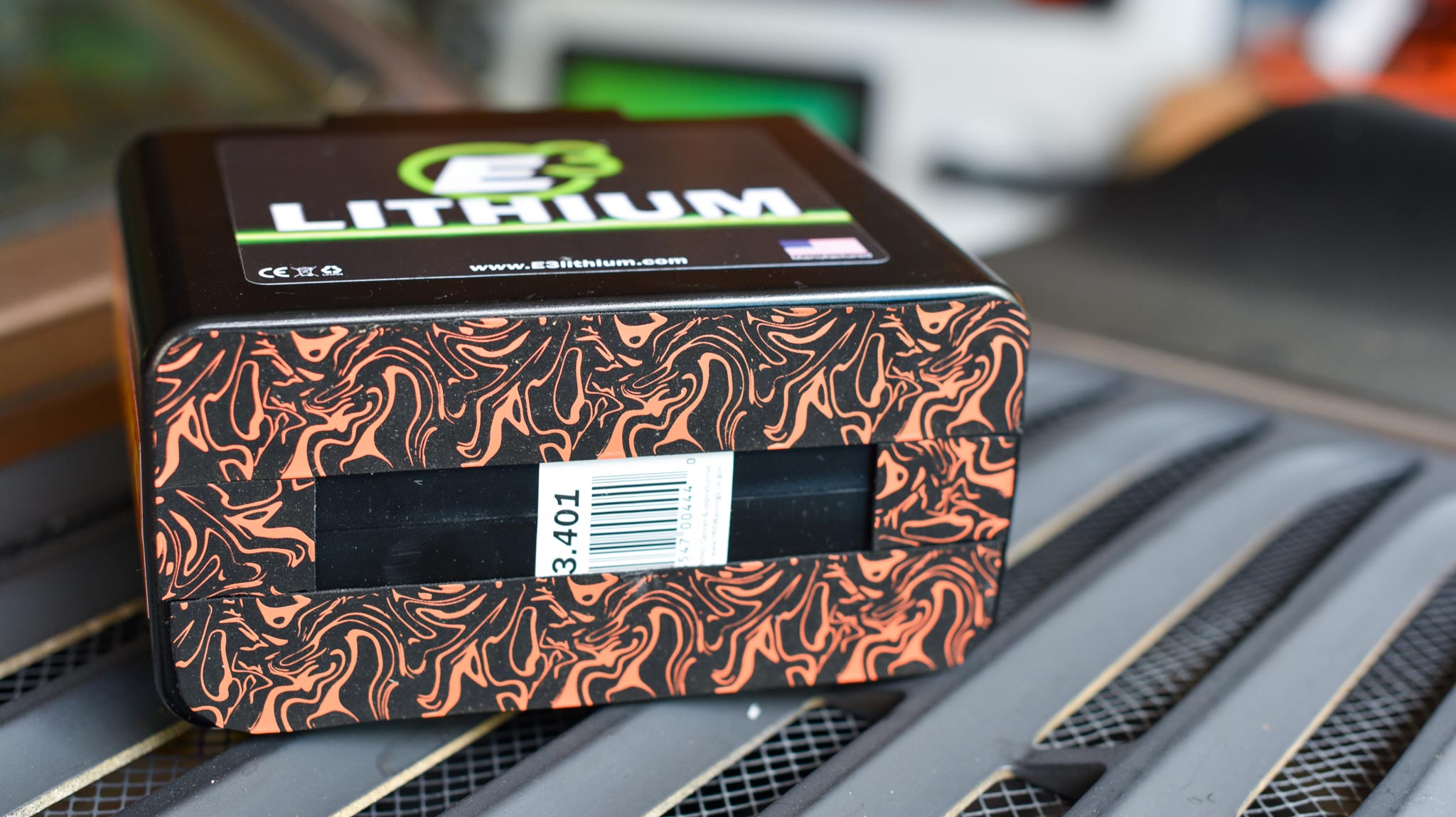
I put some bike bar-tape on the bottom of the battery to pad it from vibrations. No idea if that actually helps lol… figured it can’t hurt.
-
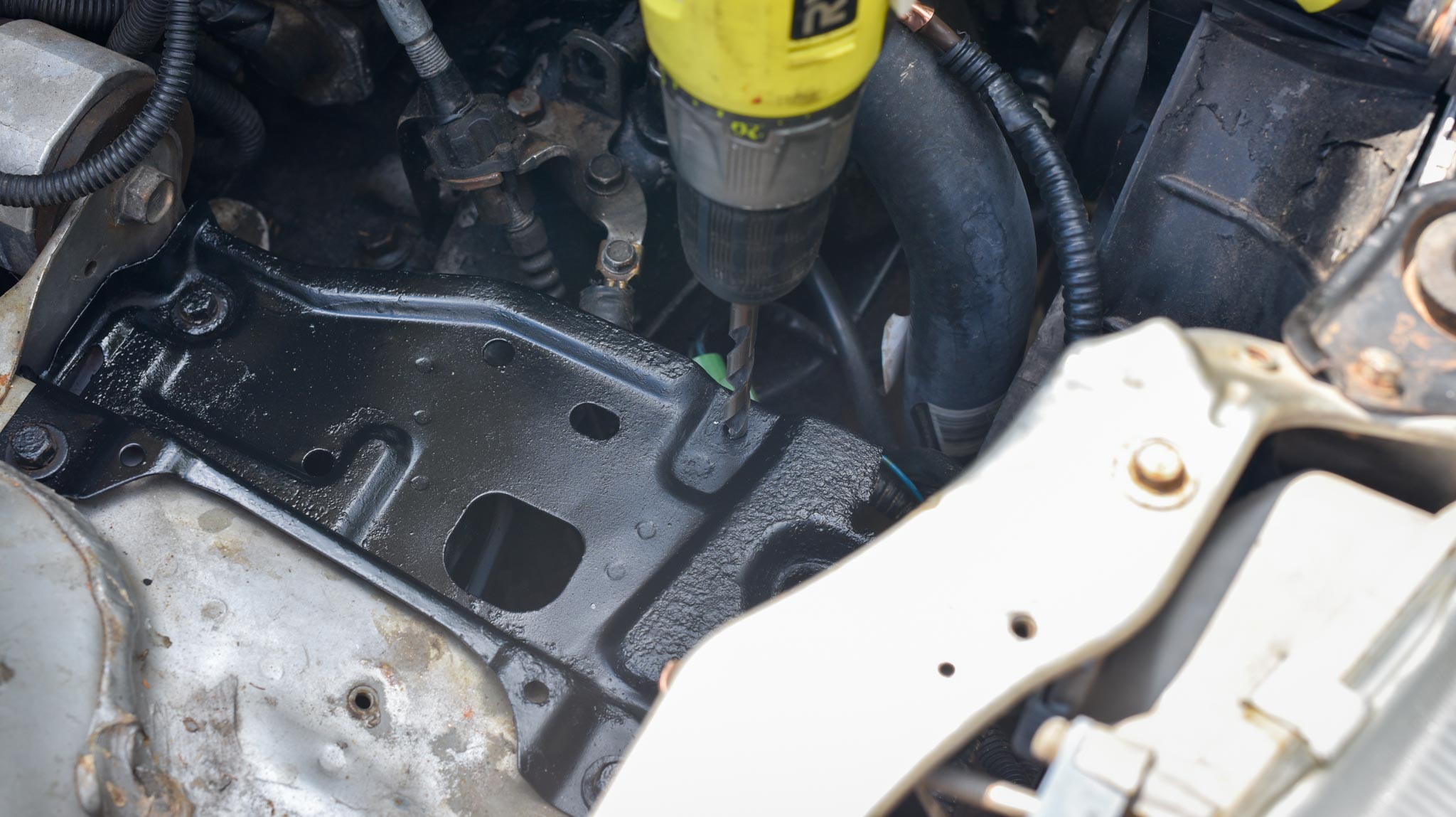
- Widened holes for new battery tie-down
-

- …Using KnKut drill bit.

Longer life…
An E3 lithium battery usually has a longer lifespan than your typical lead-acid battery. You can expect them to last 6-8 years, and that’s on the conservative side. E3 lithium batteries come with a 5 year warranty: 2 years full replacement & 3 years prorated.

DISADVANTAGES
Draw…
A potential drawback to a lithium battery is that it does not handle draw (or abuse) as well as a standard lead-acid car batteries. You can run a lithium battery all the way down to no charge… but you can’t LEAVE it at no charge. That means older cars with a parasitic draw (side-eyeing my old Porsche 944 here) could be problematic for a lithium battery if not properly monitored. The solution is to keep a battery tender on it. OR just disconnect the battery if you won’t be using the car for a while. If there’s no draw, there’s no issue.
You can run accessories (like lighting & stereo) on a lithium battery without the car running – temporarily – just like a standard car battery… so long as you buy a lithium battery with enough capacity to do so. Overall the same rules apply as a standard lead-acid battery: If you need more power out of it… you’re gonna want to buy more amps/capacity. This battery (E3.401) would not be the ideal choice for running accessories on battery-power alone. But since the CRX doesn’t have a radio… or AC… or much of anything lol… I focused on the lighter, less expensive battery.

-
- Out with the old…
-
- In with the new.
Price…
It’s hard to put price solely as a drawback, because you do get more across the board from an E3 lithium battery. The question is: What’s it worth to remove 30-40lbs from your car? Answers may vary, but poll any group of racers and they’ll obviously say it’s worth a couple hundred bucks lol. Especially in a car like my CRX, or any sport-compact where weight is the secret weapon. Where else can you free-up that much weight in a virtually plug-&-play install? And to put it in perspective – how much would a professional race team pay/invest to achieve that kind of weight reduction?