

What to Know Before Your First Track Day: The registration confirmation lands in your inbox, and suddenly, the car you drive to work everyday is headed for a real racetrack. First-timers usually worry about being too slow. The more useful worry is whether the brakes, tires and paperwork are ready, because those are what decide whether the day ends with a smile or a tow truck. A little preparation goes a long way, and this guide covers:
- How brakes, wheels, and tires handle track heat
- What a tech inspection checks, and how to pass it
- Insurance, helmets, and what to bring
- How the day itself runs, from the driver’s meeting to the flags
At a Glance
| Takeaway | Detail |
| Almost any car can go | Most beginner events accept a stock car in good working order, not a race car. |
| Brake fluid matters most | Old or standard brake fluid can boil under track use, leaving a soft pedal when you need it most. |
| Check lug nuts all day | Lug nuts should be present and tight at tech, and worth rechecking between sessions. |
| Tire pressure rises with heat | Pressures climb as tires warm up, so they need checking after each session, not only in the morning. |
| Read the insurance policy | Many auto policies now exclude track and high performance driving events outright. |
| Helmets have a standard | Events typically require a recent Snell-rated helmet, and some will lend one to first-timers. |
| Listen to the instructor | Beginner groups usually pair each driver with an instructor who rides along in the passenger seat. |

Wheels, Tires, and Brakes Take the Biggest Beating
A street car on a racetrack works its brakes, tires, and wheels far harder than any commute ever will. Braking from high speed lap-after-lap builds heat that ordinary driving never produces, and that heat goes straight into the pads, the rotors, the fluid, and the wheels around them. Brake fluid is the weak link most first-timers overlook. When it gets hot enough to boil in the lines, the pedal turns soft and can sink toward the floor, which is why many drivers flush-in a high-temperature DOT 4 fluid before their first event.
Pads need attention too. Plenty of material left on the pads is the minimum, and a car still running its original pads after years of commuting is a good candidate for fresh ones before the event. Fade comes in two forms, and knowing the difference helps on track: Overheated fluid makes the pedal feel spongy, while overheated pads keep a firm pedal but simply stop less well until they cool.
Wheels deserve the same respect. Lighter, stronger wheels reduce unsprung weight and stand up better to the cornering loads of repeated laps, which is why many regulars eventually look at forged designs once the track day habit sticks. Browsing the forged wheels collection at Discounted Wheel Warehouse shows how many sizes and styles are now made that way. For a first event though, the factory wheels in good condition are perfectly adequate.
Tire pressure is the setting that changes most during the day. As tires heat up, pressure rises, so the figure set in the parking lot at 8 a.m. will be very different after 20 minutes on track. Instructors will usually suggest a starting point for the car, and checking pressures right after each session shows how far they are climbing.
Getting Through Tech Inspection
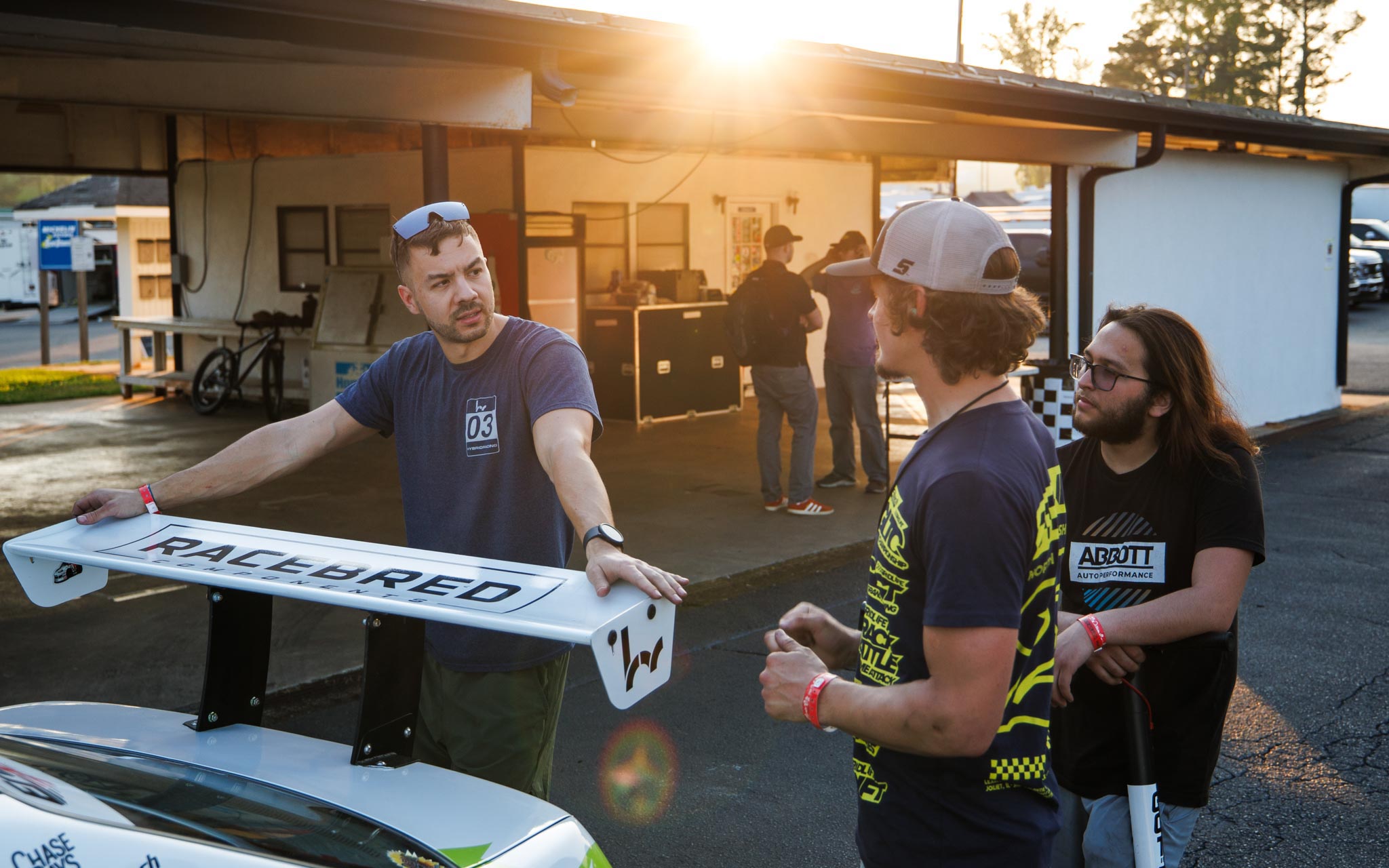
Many beginner events run some form of technical inspection – either a formal check by the organizer, or a form signed by a mechanic before arrival. The goal is simple: Make sure nothing on the car will fall off, leak, or fail at speed. Loose items are the most common problem, so everything that is not bolted down – from floor mats to the umbrella in the door pocket – should come out of the cabin & the trunk before the car rolls onto the grid.
Typical checks cover tire condition, lug nuts present and tight, hubcaps and trim rings removed, wheel bearings, fluid leaks, brake pedal feel and fluid level, a securely mounted battery, and seats bolted tight. None of it requires special parts, but a quick look under the car a week before the event leaves time to fix anything that turns up. Any maintenance, such as an oil change or brake flush, is also best done several days ahead rather than the night before, so a loose drain plug or a weeping bleeder shows itself in the driveway instead of the paddock.
Tires that look tired at tech are a reason to act early. Replacements in the right size and speed rating are worth sorting before the event, and some regulars eventually keep a separate set of wheels wearing dedicated track tires, which makes the switch in the paddock a quick job. Shopping through an online store with tens of thousands of wheels makes it easier to find a set that matches the car’s bolt pattern and offset without compromising on fitment.
Insurance, Helmets and What to Bring
The paperwork side catches more first-timers out than the driving does. According to Hagerty, auto insurers have started adding specific language that excludes track driving, high performance driving events, and racing surfaces – which means a standard policy may pay nothing if the car is damaged on track. Dedicated high performance driving event insurance exists to cover physical damage to the car during the event, although Hagerty notes its policy does not include liability coverage for the driver.
Helmets have their own rules. The FARA tech form for 2024, for example, calls for a helmet meeting the Snell SA2020 standard or newer, and other organizers set similar requirements. The Sports Car Club of America (SCCA) says the essentials are simply a driver’s license, a car in good working order and a helmet, and some events can lend a helmet to newcomers.
| Item | Why it matters |
| Approved helmet | Required at almost every event, with a minimum certification standard |
| Driver’s license and event paperwork | Needed at registration and sometimes at tech |
| Tire pressure gauge | Pressures change after every session |
| Torque wrench and basic tools | For rechecking lug nuts and small fixes in the paddock |
| Water, food, sunscreen and a chair | Track days are long, and most of the day is spent off track |
Fuel is the other thing to plan for. Hard driving on track burns through a tank far faster than a highway trip, so arriving with a full tank and knowing where the nearest station is saves an awkward search between sessions.

What the Day Itself Looks Like
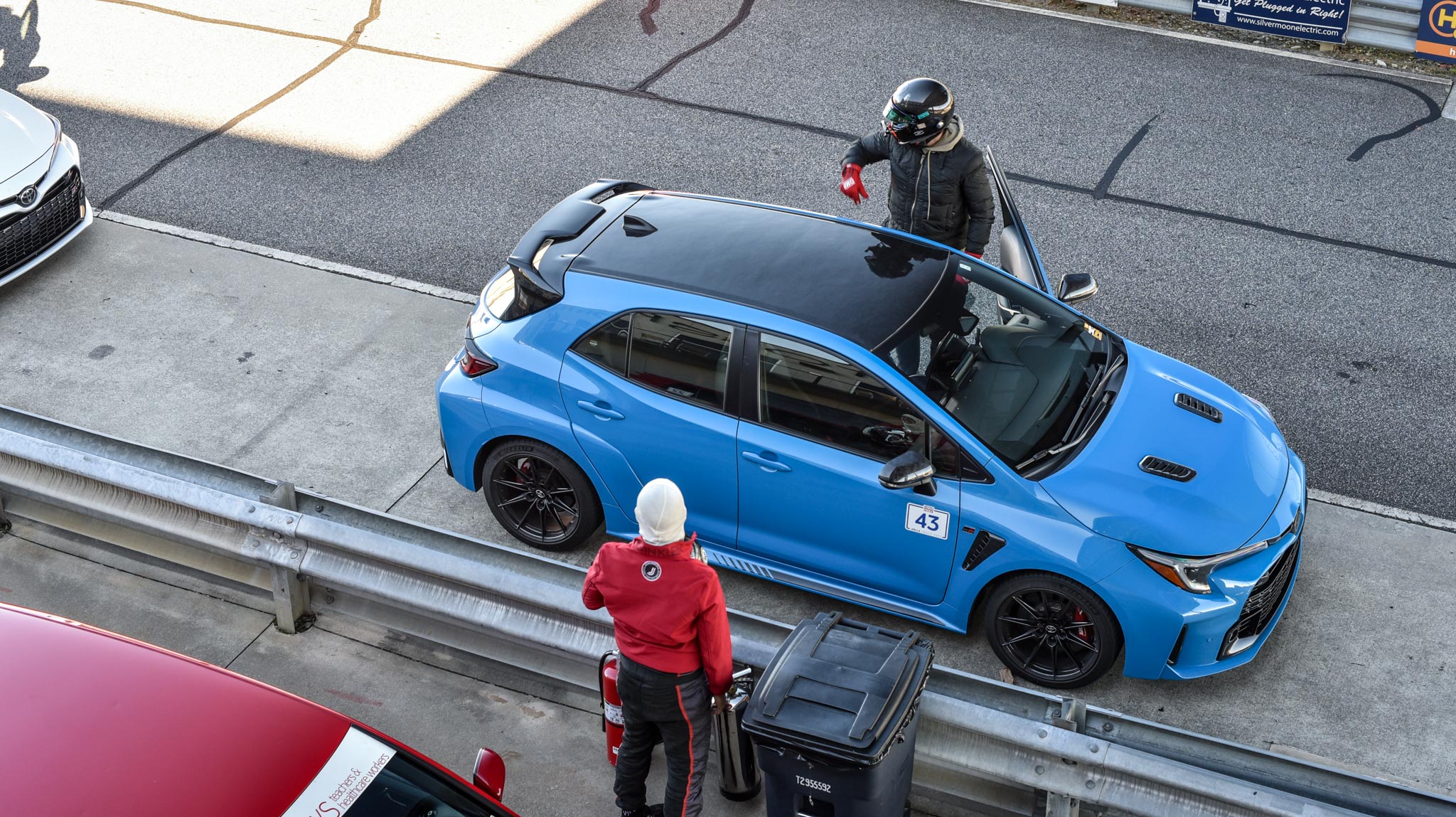
A typical day starts early with registration, tech inspection, and a mandatory driver’s meeting – where the chief instructor explains the rules, the passing zones, and the flags. Beginners are usually grouped together and paired with an instructor who rides in the passenger seat, calling-out braking points and lines. Sessions are often around 20-to-30 minutes long, with plenty of time in between to cool the car, check pressures, and talk through what happened.
Flags are the track’s language, and learning them before arriving helps enormously. A yellow flag signals caution and no passing, a red flag means slowing down and stopping safely off the racing line, a black flag calls a driver into the pits, and a checkered flag ends the session. Instructors will review them, but knowing them in advance lets a first-timer focus on driving instead of decoding.
Passing works differently from the street, too. In most beginner groups, passing is allowed only on designated straights, and only after the car ahead gives a clear point-by signal, usually a hand pointing out the window to the side the faster car should use. It feels slow at first, yet it keeps a group of newcomers predictable and safe. Staying hydrated and taking a real break between sessions matters just as much, because concentration fades long before the car does.

Final Thoughts
A first track day rewards preparation far more than bravery. Fresh brake fluid, healthy pads and tires, tight lug nuts, and a clear understanding of the insurance and helmet rules take care of most of what can go wrong… and the instructor handles the rest.
Key Takeaways
- Flush the brake fluid with a high-temperature fluid and inspect the pads at least a week before the event
- Call your insurer, read the policy for track exclusions and consider event-specific coverage
- Pack a pressure gauge and torque wrench, and recheck tire pressures and lug nuts after every session
Most people drive home from their first event already planning the second. The ones who prepared well usually drive home in the same condition they arrived.

Frequently Asked Questions
Can you take a stock car to a track day?
Yes. Beginner events are built around ordinary street cars, and the Sports Car Club of America says almost any car in good working order can take part, as long as it is not leaking fluids and is safe to drive. Some events restrict tall vehicles and require roll-over protection in convertibles, so check the organizer’s rules first.
Does car insurance cover track days?
Often it does not. Many auto insurers have added language that specifically excludes track driving, high performance driving events, or racing surfaces. Drivers should read their policy and ask the insurer directly before the event. Separate track day insurance can cover physical damage to the car during the event, although liability coverage may be excluded.
What kind of helmet do I need for a track day?
Most events require a helmet certified to a recent Snell standard, typically the SA rating designed for motorsport, and some specify a minimum year such as SA2020. Older certifications may not be accepted, and some events accept only SA-rated helmets rather than motorcycle ratings. Check the organizer’s requirements when registering, since some events can also lend a helmet to first-time participants.
Do I need special brake fluid for a track day?
It is strongly recommended. Standard brake fluid can boil under the repeated hard braking of track driving, which leads to a spongy pedal and reduced stopping power. Flushing the system with a high-temperature DOT 4 fluid before the event is one of the most effective preparation steps, and it is best done by a shop that can remove all the old fluid.
Are forged wheels worth it for track days?
For regular track use, many drivers think so. Forged wheels are generally lighter and stronger than cast wheels, because the forging process allows less material to be used for the same strength, and they tend to bend rather than crack under a heavy impact. They also cost more, so they make most sense once track days become a habit.
How should I set tire pressure for a track day?
Start from the pressure your instructor or the event recommends for your car, then check the tires immediately after each session while they are hot. Pressure rises as tires heat up, so the goal is a consistent hot pressure rather than a fixed cold figure. Reset the tires to the door placard pressure before driving home on public roads.