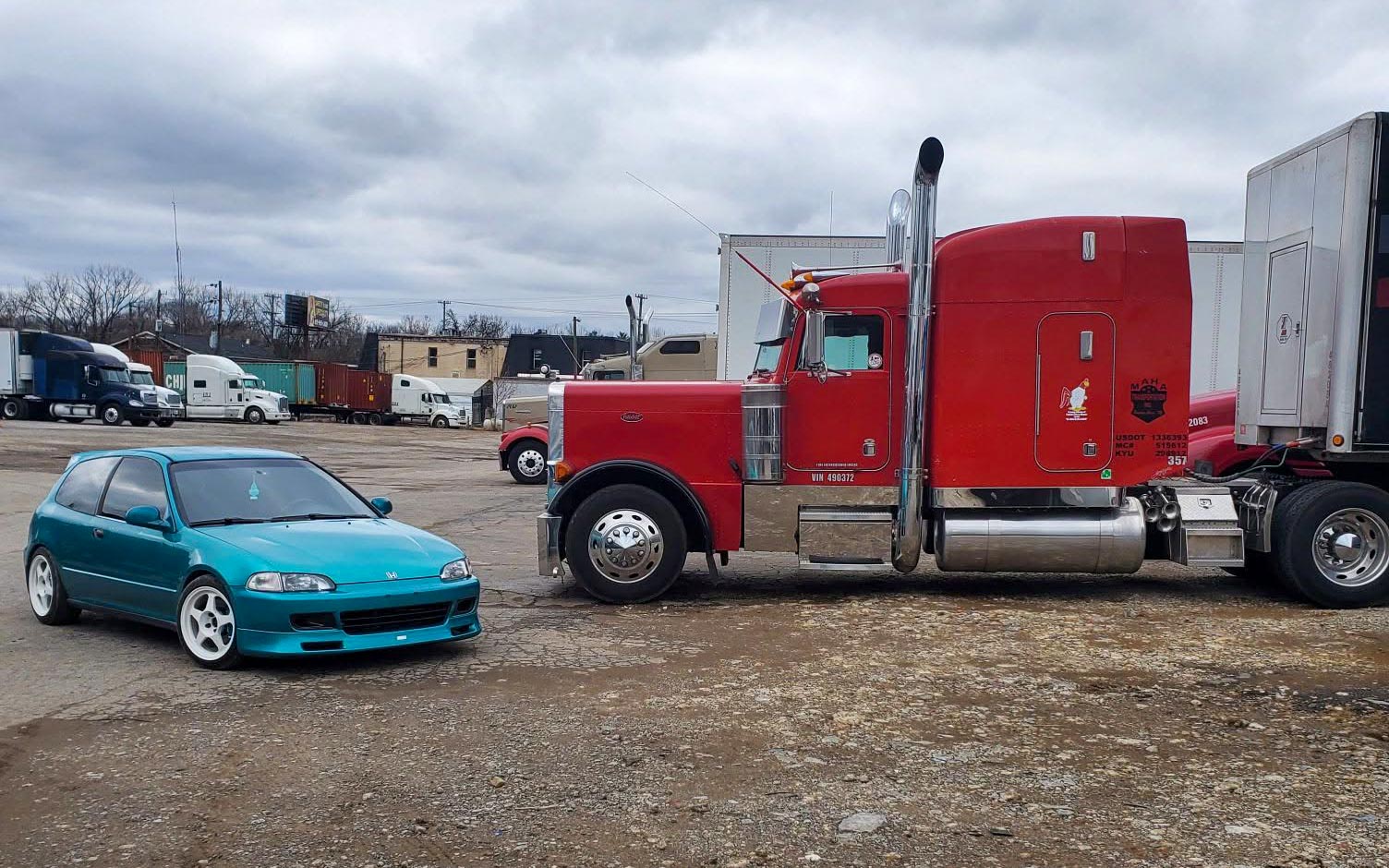

Spend enough time behind the wheel of something you actually enjoy driving, and you develop a set of instincts about the cars around you. You know roughly how long the SUV ahead needs to stop, how much room the hatchback in the next lane needs to change lanes, what a driver is about to do from the way the nose of their car settles.
But almost none of that transfers to a loaded tractor-trailer. A Class 8 truck at the federal gross weight limit is around 80,000 pounds, which is roughly twenty times a mid-size car. And the way it behaves follows from that number. Most of the bad moments between cars and trucks come from drivers applying car instincts to a vehicle that does not obey them.
The stopping distance problem
The single most useful fact to carry around – is how much longer a truck takes to stop. The Federal Motor Carrier Safety Administration puts a fully loaded tractor-trailer traveling at 65 miles-per-hour at roughly 525 feet of stopping distance… compared with around 300 feet for a passenger car. That is a difference of about 2/3 the length of a football field.
This is physics, not driver skill. Air brakes have a lag the driver cannot remove, the mass is enormous, and brake-fade on a long grade is a real limit rather than a theoretical one. A truck driver who sees a problem at the same instant you do, simply cannot respond in the same distance.
Which makes the most common maneuver on any interstate – cutting into the gap in front of a truck because it looks invitingly large – exactly backwards. That gap is the truck’s stopping distance. Taking it does not save you meaningful time, and it removes the margin that protects you.
Blind spots are bigger than the mirrors suggest
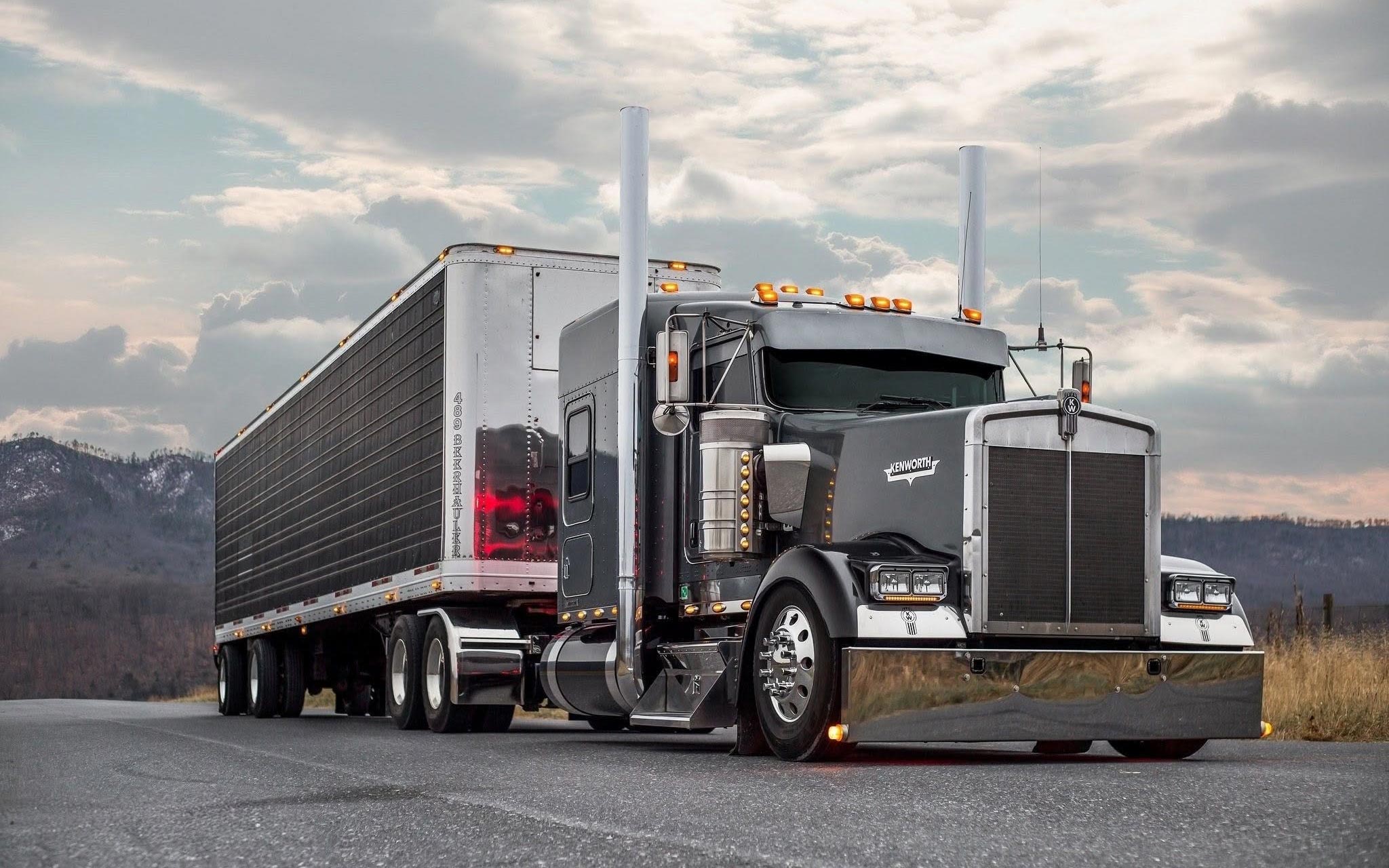
A tractor-trailer has four substantial blind areas: directly in front of the cab for about 20 feet, directly behind the trailer for around 30, a lane and a half on the right side, and a smaller but real zone on the left. Sitting in any of them means the driver cannot see you at all.
The right side is the one that catches people out, because a truck making a right turn has to swing wide to the left first. A car that fills the gap on the right during that swing is in the one place the driver cannot check, and the trailer is about to occupy.
The rule that works is simple. If you cannot see the driver’s face in the truck’s side mirror, the driver cannot see you… and you should not be there any longer than it takes to get past.
Underride is the reason to pass decisively
The reason safety researchers care so much about car & truck interactions is that the geometry is unforgiving. A passenger car striking the back or side of a trailer can slide underneath it, so the trailer meets the car at windshield height rather than at the bumper, and the structure engineered to protect occupants never comes into play.
The Insurance Institute for Highway Safety has spent years testing rear underride guards and pressing for stronger side guards, and its crash testing has repeatedly shown the difference between a guard that holds and one that fails. Rear guards are mandatory in the United States and side guards are not, which is a gap that shows up in real crashes.
The practical takeaway is to treat time spent alongside a trailer as time to be minimized. Pass with intent, or sit well back. And do not cruise next to 40 feet of unguarded trailer because the view is nice.
Fatigue is regulated for a reason
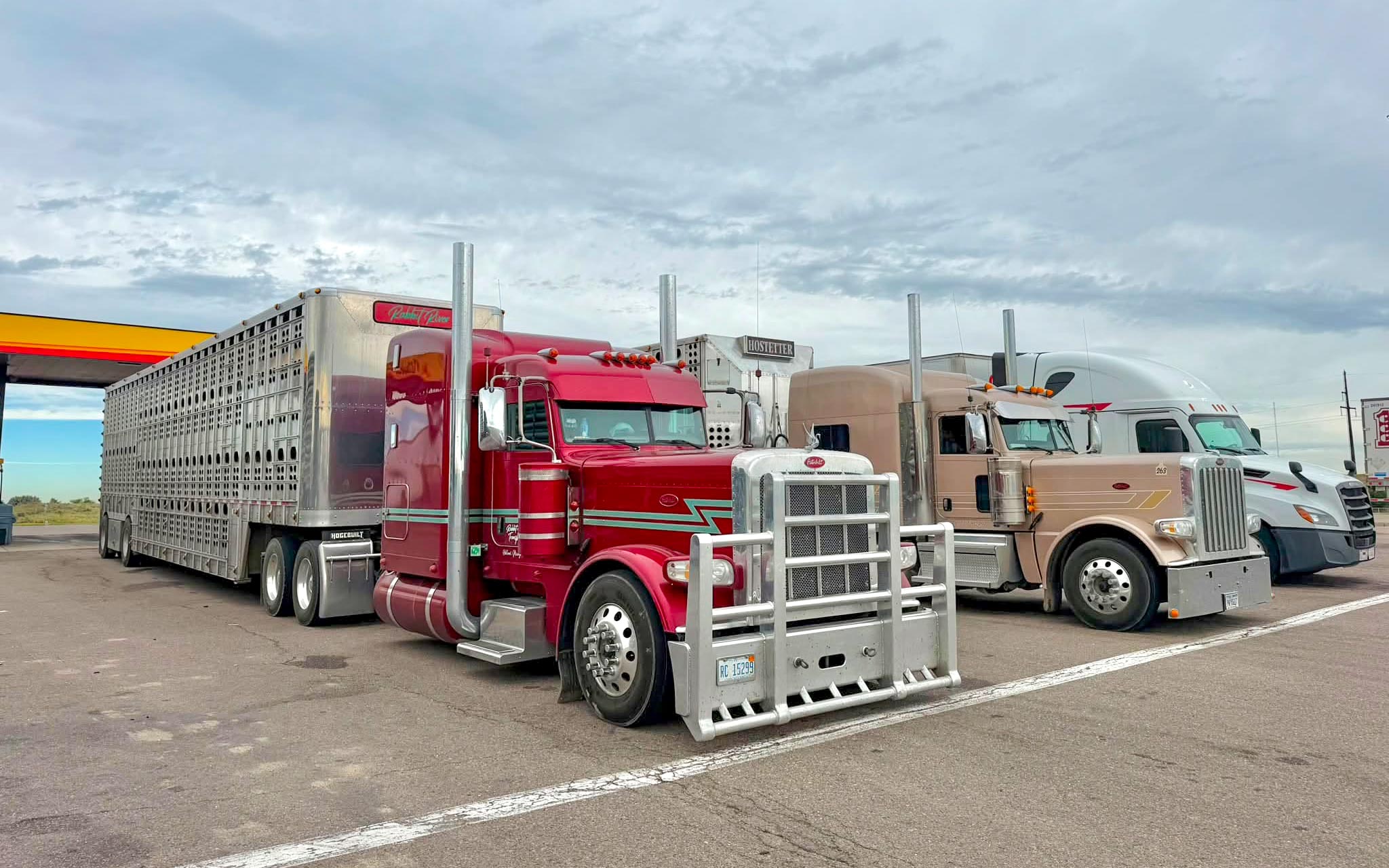
Truck drivers operate under federal hours of service rules that cap driving at 11 hours after 10 consecutive hours off duty, inside a 14 hour window, with a required 30 minute break. Since the electronic logging device mandate, most of that is recorded automatically rather than written in a paper log.
That matters to anyone sharing the road in two ways. It tells you that fatigue is considered the central risk in the industry rather than an occasional lapse. And it means that when something does go wrong, there is a data trail: logs, engine control module data, dispatch records, and maintenance files that show when the brakes were last inspected.
What makes a truck crash different afterwards
If you are unlucky enough to be involved in one, the situation is not a bigger version of a fender bender. It is a different kind of event with different parties.
A commercial crash can involve the driver, the motor carrier that employs them, the company that owns the trailer, the business that loaded the cargo, a maintenance contractor, and the insurer behind all of them. Federal regulations apply alongside state law. And the carrier’s own investigators are often on scene within hours, because they understand how much the evidence matters.
That evidence is also perishable. Electronic logging data and engine module records can be overwritten on a schedule, damaged vehicles get repaired or scrapped, and the skid marks are gone with the next rain. Firms that handle these cases, such as the Pennsylvania practice that explains how truck accident claims are built from logs, maintenance records, and reconstruction work – tend to say the same thing: The first days decide what is still provable a year later.
Deadlines matter too, and they vary by state. Pennsylvania, for example, gives two years from the date of injury to file most personal injury claims under 42 Pa.C.S. § 5524. And other states set their own clocks.
What to do at the scene
The basics are the same as any crash, and a few additions are specific to commercial vehicles. Get medical attention even if you feel fine, because adrenaline hides a great deal, and the gap between the crash and the first medical record is the first thing an insurer will point at.
Photograph the truck’s DOT number and the carrier name on the door, the trailer, the cargo if it is visible, and the position of the vehicles before anything is moved. Get the responding officer’s name and the report number. Be careful about recorded statements to the carrier’s insurer in the first days, when you do not yet know the extent of your own injuries.
None of this is anti-truck
Professional drivers are – on the whole – among the most skilled people on the road. They are managing a vehicle with constraints most of us never experience, often on a schedule set by somebody else, surrounded by cars whose drivers treat them as scenery.
The useful attitude is not suspicion but awareness of the constraints. Leave the gap, stay out of the blind areas, pass with purpose, and remember that nothing about a loaded truck can respond at the speed a car can. The fact that we mostly get away with ignoring all of that says more about truck drivers than it does about the rest of us.
References
- Federal Motor Carrier Safety Administration. Large Truck and Bus Crash Facts and driver safety guidance on stopping distance. Washington, DC: FMCSA.
- Insurance Institute for Highway Safety. Large trucks: underride guard research and crash testing. Arlington, VA: IIHS.
- Federal Motor Carrier Safety Administration. Hours of Service of Drivers, 49 CFR Part 395. Washington, DC: FMCSA.
- 42 Pa.C.S. § 5524, Pennsylvania statute of limitations for personal injury actions.