
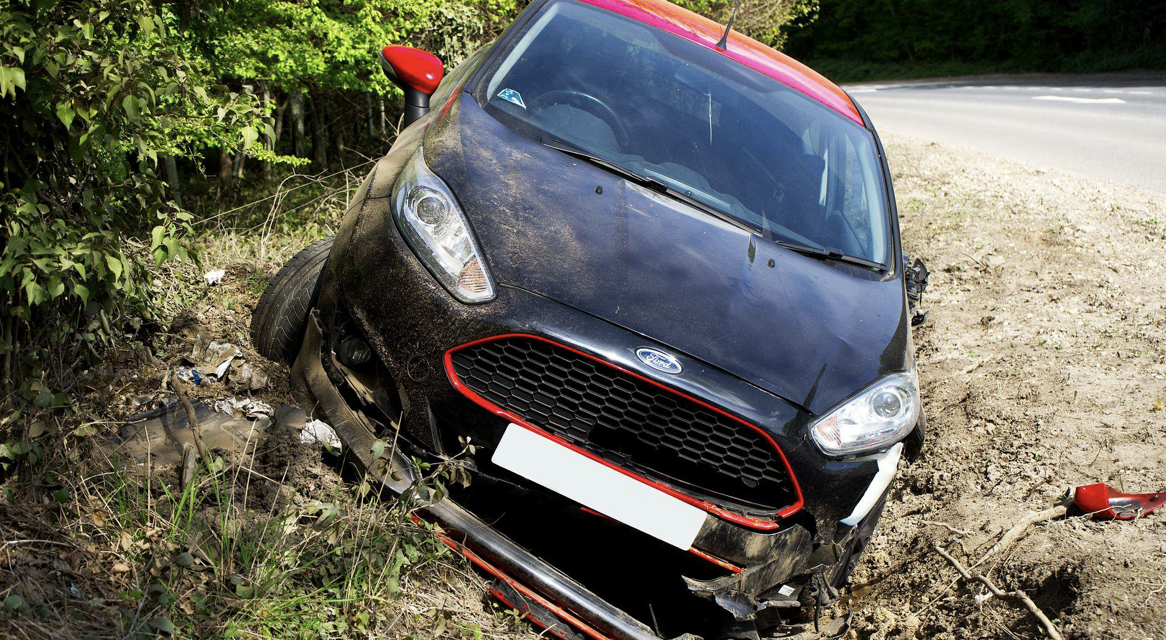

Georgia’s roads claimed 1,797 lives in 2025, according to preliminary data from the Governor’s Office of Highway Safety and the Fatality Analysis Reporting System. That figure marks a 7 percent increase over 2022 and puts the state well above its pre-pandemic baseline. For context, Georgia recorded 1,522 traffic deaths in 2019. The upward trajectory is not a statistical blip.
Metro Atlanta accounts for a disproportionate share. The junction where I-75 and I-85 merge through downtown—locally known as the Connector—logged 41 serious injury crashes in 2025 alone, with eight fatalities. I-285, the Perimeter highway encircling the city, saw 96 fatal or serious-injury collisions across its 64-mile loop. Those numbers do not include fender-benders or minor rear-ends; they represent crashes that sent someone to Grady Memorial or left a family planning a funeral.
While vehicle miles traveled have stabilized nationally after the sharp drop during COVID lockdowns, fatality rates per hundred million miles remain elevated. The NHTSA reported a national rate of 1.35 deaths per 100 million VMT in early 2025, compared to 1.11 in 2019. Georgia tracks slightly higher than the national average, a position it has held for the past decade. Drivers here face a measurably greater risk than they did five years ago, and the data offers no evidence that 2026 will reverse the trend.
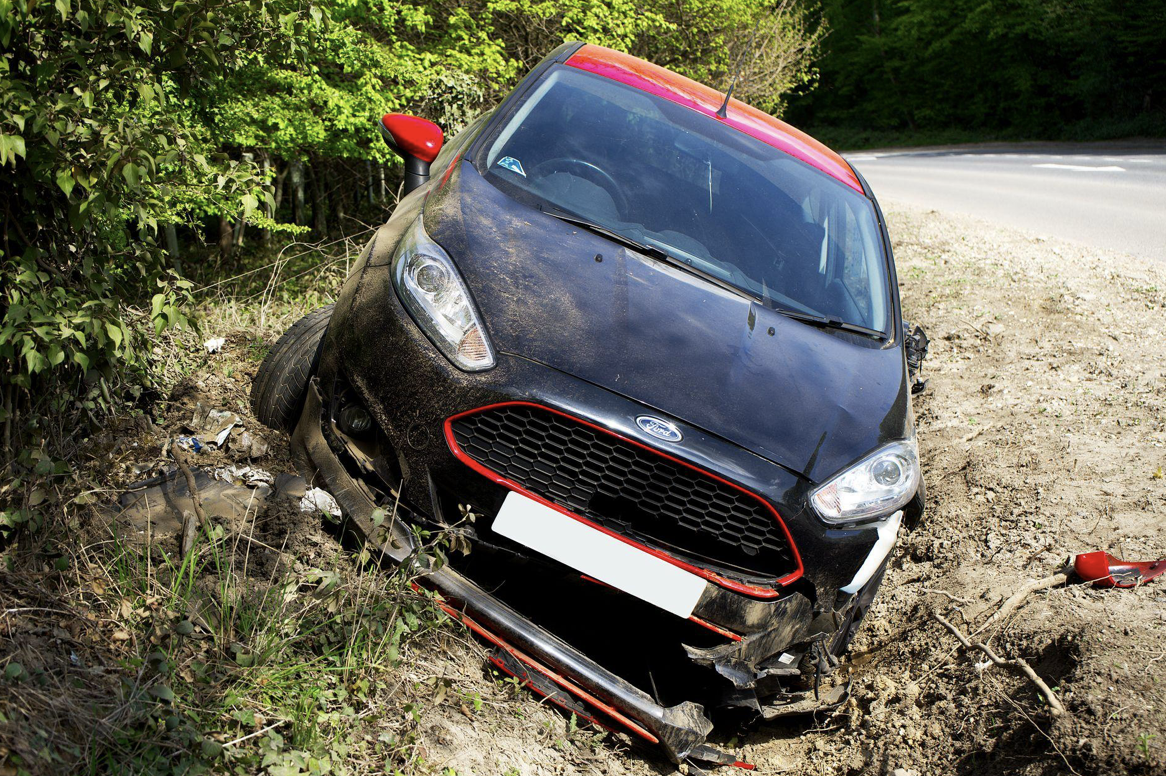
Why Georgia’s Roads Got More Dangerous Last Year
Several factors converged in 2025. Speeding remains the leading behavioral contributor, involved in roughly 31 percent of Georgia’s fatal crashes. Impaired driving—alcohol, cannabis, or prescription opioids—accounts for another 28 percent. Distracted driving is harder to quantify because police reports often lack proof, but the Georgia Department of Transportation estimates it plays a role in at least one-in-five serious collisions.
Infrastructure strain also matters. Atlanta’s population grew by approximately 60,000 residents between 2020 and 2025, yet the region’s freeway capacity did not expand proportionally. The I-285 and Georgia 400 interchange in Sandy Springs, already a choke point, handled an average of 310,000 vehicles per weekday in 2025. High traffic volume compresses following distances and raises the probability that one driver’s mistake cascades into a multi-vehicle pileup.
Construction zones added another layer of risk. The I-285/I-20 West reconstruction project, which began in mid-2022, introduced shifting lane patterns and reduced shoulders along a 16-mile stretch. GDOT crash data shows that corridor experienced a 19 percent uptick in rear-end collisions during the first year of construction. Work-zone crashes tend to produce higher injury severity because vehicles are already moving at highway speed when brake lights appear suddenly.
Weather does not explain the year-over-year increase, but it shapes when and where crashes cluster. Georgia’s summer storm season—June through August—produces late-afternoon thunderstorms that drop visibility and slick pavement with no warning. Those conditions contributed to a 14-car pileup on I-75 near Macon in July 2025, injuring 22 people. Winter rarely brings snow to Atlanta, but freezing rain in January 2025 caused a 53-vehicle chain reaction on I-85 in Gwinnett County, killing one and hospitalizing eleven.
The Seasonal Pattern: When Georgia Drivers Face Peak Risk
Georgia’s traffic fatalities do not distribute evenly across the calendar. The period from Memorial Day weekend through Labor Day consistently produces the highest death tolls. In 2025, those 14 weeks accounted for 623 fatalities—more than one-third of the annual total. July alone saw 187 deaths, the deadliest month on record for the state since 2007.
Holiday weekends amplify risk. The July 4th holiday period in 2025 ran from Friday, June 30, through Tuesday, July 4. Georgia State Patrol responded to 42 fatal crashes during those five days, a rate nearly double the daily average for the rest of the year. Alcohol involvement climbed to 41 percent during that window, well above the annual average. Memorial Day and Labor Day weekends followed similar patterns, though with slightly lower totals.
Thanksgiving through New Year’s represents the year’s second-deadliest corridor. The six-week stretch in 2025 produced 389 fatalities. The week between Christmas and New Year’s Day is particularly hazardous. Impaired driving peaks on New Year’s Eve—Georgia troopers made 312 DUI arrests statewide between 6 p.m. on December 31, 2025, and 6 a.m. on January 1, 2026—but serious crashes occur throughout the holiday week as out-of-town visitors unfamiliar with local roads mix with residents juggling shopping trips and family obligations.
Spring construction season overlaps with rising vacation travel. GDOT typically schedules major paving and bridge work between March and June, when weather permits but summer vacation traffic has not yet arrived. The I-285 eastside express lanes project, active from March through May 2025, forced lane shifts near the I-85 split. That three-month window saw 22 work-zone crashes with injuries, including a fatal collision involving a tractor-trailer that struck a construction barrier and rolled into the adjacent travel lane.
What the Numbers Say About Injury Severity and Medical Costs
Not every crash makes the fatality count, but the non-fatal serious injury trend is equally troubling. Georgia uses the KABCO injury-severity scale to classify crash victims. “A” injuries—suspected serious injuries requiring immediate medical attention—rose 9 percent in 2025 compared to 2022. These include traumatic brain injuries, spinal fractures, internal bleeding, and compound fractures. “B” injuries—suspected minor injuries such as whiplash, contusions, or lacerations—remained roughly flat year-over-year, but the absolute number still exceeded 18,000 cases statewide.
Hospital costs reflect that severity. A Level I trauma center admission in Georgia averages between $40,000 and $75,000 for the initial stabilization and inpatient stay, depending on the injury. Grady Memorial, Atlanta’s primary trauma center, treated 1,244 motor-vehicle trauma cases in 2025. Wellstar Kennestone in Marietta and Gwinnett Medical Center also handle high volumes. These figures cover only the acute phase—emergency department care, surgery if needed, and a few days of observation.
The real financial burden emerges in the weeks and months after discharge. A patient with a moderate traumatic brain injury might require follow-up neurology appointments, cognitive rehabilitation, and imaging studies that together cost $15,000 to $25,000 over six months. Whiplash and soft-tissue injuries often produce delayed symptoms. A driver who walks away from a rear-end collision feeling sore but functional may develop debilitating neck pain or headaches a week later, prompting a return visit to an urgent-care clinic or a referral to a specialist. Many victims in that situation seek care from an Atlanta car accident chiropractor to address persistent musculoskeletal pain that standard emergency treatment did not resolve, particularly when follow-up imaging reveals soft-tissue damage that was not immediately apparent.
Insurance coverage frequently runs out before treatment ends. Georgia’s personal injury protection (PIP) policies typically cap at $25,000 for medical expenses, though many drivers carry lower limits or forgo PIP altogether. A serious crash can exhaust that amount within the first month. Once PIP is tapped out, victims turn to their health insurance, which may not cover accident-related care without a lengthy appeal process, or they negotiate payment plans with providers. The gap between actual medical costs and available coverage leaves many injured drivers facing collection notices while still attending physical therapy.
The Two-Week Window: Why Crash Victims Wait Too Long
Data from Georgia personal-injury practices shows a consistent pattern: most crash victims wait between 10 and 14 days after the collision before consulting an attorney. That delay often proves costly. Insurance adjusters typically make initial contact within 48 hours, sometimes within hours if the crash involves a commercial vehicle or a high-speed highway collision that generates a police report with clear liability indicators.
Adjusters are trained to secure a recorded statement early, ideally before the victim has seen a doctor or spoken to legal counsel. The statement seems harmless—just a routine account of what happened—but offhand remarks can undermine a claim later. A victim who says “I feel okay” on day two may discover a herniated disc on day ten. That early statement becomes exhibit A when the insurer argues the injury was pre-existing or unrelated.
Medical documentation suffers from the same delay problem. Emergency room visits generate records, but many crash victims do not go to the ER if they can walk and talk. They assume soreness will fade. When symptoms worsen a week later, there is now a gap in the treatment timeline that insurers exploit. “Why did you wait seven days to see a doctor if you were really hurt?” becomes a standard question during claim negotiations.
This is why many personal-injury attorneys recommend at least an initial consultation within the first 72 hours, even if the victim is unsure whether they have a viable claim. An early conversation with a car accident lawyer in Atlanta preserves the documentation trail and ensures that any statements to insurers are made with a clear understanding of what is legally required versus what is optional. The attorney can also coordinate medical referrals if the victim’s primary-care physician is unavailable or unfamiliar with accident-related injuries. The goal is not necessarily to file a lawsuit on day one; it is to avoid foreclosing options later because critical evidence was lost or statements were made without guidance.
Witness information degrades quickly. Passengers in other vehicles move on. Bystanders who saw the crash happen forget details or discard the business card an investigator handed them. Surveillance footage from nearby businesses often overwrites after 7 to 14 days unless someone requests preservation. Police reports take several days to finalize, and errors in those reports—misidentified vehicles, incorrect fault determination—are far easier to correct when flagged immediately rather than six weeks later during a claim dispute.
High-Risk Intersections and Corridors: Where the Data Points
Certain locations produce a disproportionate share of Georgia’s crashes. The I-285 and I-20 West interchange in southwest Atlanta logged 34 serious injury crashes in 2025, making it one of the metro area’s most dangerous junctions. The interchange design forces merging traffic to cross three lanes in less than a quarter mile, a maneuver that becomes nearly impossible during peak hours. T-bone collisions dominate here, typically when a driver misjudges a gap and is struck by through traffic.
The I-75 and I-575 split in Kennesaw, just north of the Perimeter, is another repeat offender. This location saw 28 crashes with serious injuries last year. The split occurs on a curve, and drivers unfamiliar with the route often realize too late which fork they need. Last-second lane changes trigger sideswipe and rear-end collisions. Afternoon rain exacerbates the problem; the roadway does not drain well, and standing water reduces traction.
Downtown Atlanta’s Courtland Street and Edgewood Avenue intersection has earned a reputation among local advocates as one of the city’s deadliest for pedestrians and cyclists. In 2025, this intersection accounted for three pedestrian fatalities and nine serious injuries. The signal timing allows vehicles to turn right on red even as pedestrians have a walk signal, creating conflict. Speed is also a factor—drivers treat Courtland as a high-speed connector between I-75/85 and Ponce de Leon Avenue, despite the 30 mph posted limit.
The intersection of Buford Highway and Clairmont Road in DeKalb County presents a different hazard profile. Heavy commercial traffic, including delivery trucks and freight vehicles, mixes with passenger cars at a six-lane signalized intersection. In 2025, this location produced 19 serious injury crashes, with rear-end collisions and left-turn conflicts making up the majority. Poor sight lines due to utility poles and commercial signage compound the problem.
Further south, the I-75 and Georgia 42 interchange in Locust Grove has become a trouble spot as exurban development pushes farther from Atlanta. The interchange handled 18 serious crashes last year, most involving vehicles entering or exiting I-75. Rural drivers unaccustomed to interstate speeds misjudge closing distances, while Atlanta-bound commuters treat the ramp as an extension of the highway and fail to slow for merging traffic.
Savannah’s I-16 and I-95 junction also merits attention. Though outside metro Atlanta, this interchange is a critical chokepoint for coastal traffic. It recorded 23 serious injury crashes in 2025, with a high proportion involving tractor-trailers. The interchange’s design dates to the 1960s and lacks adequate acceleration lanes, forcing trucks to merge into 70 mph traffic from a near stop.
What Injured Drivers Should Do in the First 72 Hours
The hours immediately after a crash determine whether you will have the evidence and documentation needed to support a medical claim or lawsuit months later. Here is what should happen within the first three days:
Hour 0-2: Scene actions. Call 911 even if injuries seem minor. A police report creates an official record and establishes a timeline. Exchange insurance and contact information with the other driver, but do not discuss fault or apologize—those statements can be misinterpreted. Photograph vehicle damage from multiple angles, capture license plates, and take wide shots showing the intersection or roadway layout. If there are witnesses, ask for names and phone numbers.
Hour 2-24: Medical evaluation. Visit an emergency room or urgent-care clinic within 24 hours, even if you feel only mild soreness. Delayed-onset injuries are common, and a medical record dated the same day as the crash eliminates any argument that the injury occurred later. Be specific when describing symptoms to the treating physician. “My neck hurts” is vague; “sharp pain in the left side of my neck that worsens when I turn my head” creates a usable medical record.
Day 1-2: Document everything. Request a copy of the police report as soon as it is available, usually within 48 to 72 hours. Review it for accuracy. If the officer misidentified the at-fault vehicle or recorded incorrect information, file a supplement or correction request immediately. Obtain a claim number from your insurance company, but do not provide a recorded statement until you have consulted legal counsel. You are required to report the crash; you are not required to give a blow-by-blow account over the phone.
Day 2-3: Preserve evidence. Contact any businesses with surveillance cameras that might have captured the crash and request that they preserve the footage. Many systems overwrite after a week. If your vehicle has a dashcam, download and back up the footage to multiple locations. If the crash involved a commercial vehicle—delivery van, tractor-trailer, rideshare—that vehicle likely has telematics data and internal cameras. Your attorney can send a preservation letter to the company, but that letter needs to go out within days, not weeks.
Day 3: Initial consultations. Schedule a follow-up with your primary-care physician and, if symptoms warrant, a specialist. If you missed work, document the dates and obtain a note from your doctor. Contact an attorney for at least an initial consultation to understand your rights and obligations. Many personal-injury attorneys offer free case evaluations, and an early conversation ensures you do not inadvertently waive rights or make statements that complicate a future claim.
The Hidden Cost: When Insurance Math Doesn’t Match Medical Reality
Georgia law does not require drivers to carry personal injury protection, though insurers must offer it. Many drivers decline PIP to save on premiums or accept the minimum $25,000 limit. That amount sounds adequate until you price-out the treatment required for common crash injuries.
A moderate whiplash case typically requires an initial ER visit ($3,000 to $5,000), follow-up with an orthopedist or neurologist ($500 to $1,200 per visit over three months), physical therapy twice a week for eight weeks ($150 to $250 per session, totaling $2,400 to $4,000), and follow-up imaging if symptoms persist ($1,500 to $3,000 for an MRI). The total easily exceeds $10,000 before accounting for prescription pain medication or injections. If the victim misses work, lost wages compound the financial burden.
Serious injuries blow through coverage even faster. A traumatic brain injury requiring inpatient rehabilitation can cost $100,000 in the first three months. Spinal surgery and post-surgical care can run $150,000 to $200,000. PIP and health insurance may cover portions, but deductibles, co-pays, and out-of-network charges leave victims with five-figure medical debt.
Uninsured and underinsured motorist coverage becomes critical in a state where 12 to 14 percent of drivers lack insurance. If the at-fault driver carries only the Georgia minimum—$25,000 per person—and your injuries exceed that amount, your own UM/UIM policy is the only recourse. Yet many drivers carry UM/UIM limits that match their liability limits, leaving gaps when a serious crash exhausts both policies.
Health insurers add another complication. If your health plan pays for crash-related treatment, it may assert a subrogation lien against any settlement or verdict you recover from the at-fault driver. That lien reduces your net recovery, sometimes substantially. Negotiating lien reductions requires legal and medical billing expertise that most crash victims do not possess on their own.
Why 2026 May Not Look Better
The factors that drove Georgia’s 2025 fatality spike show no signs of abating. The I-285 eastside express-lanes project, which added capacity in 2025, is now matched by a westside expansion scheduled through late 2025. Construction zones will again compress traffic and introduce shifting lane patterns on one of the state’s busiest highways.
Atlanta’s population growth continues. The metro area added an estimated 55,000 residents in the first half of 2024, according to Census Bureau estimates. More drivers mean more opportunities for human error, even if per-capita crash rates remain constant. The region’s transit system has not expanded to match population growth, so most new residents drive.
Distracted driving has plateaued rather than declined. Smartphone use behind the wheel remains pervasive despite Georgia’s hands-free law, which took effect in 2018. Enforcement is sporadic—officers must observe a driver holding a phone to make a stop, and many violators simply place the device in their lap when they see a patrol car. The Insurance Institute for Highway Safety estimates that distracted driving contributes to 20 to 25 percent of all crashes nationally, a figure that has not budged in five years.
Vehicle safety technology is advancing, but adoption lags in Georgia’s aging fleet. Automatic emergency braking, lane-departure warnings, and blind-spot monitoring are now standard on many new vehicles, but the average car on Georgia roads is 12.3 years old. It will take another decade before the majority of the state’s fleet includes these features. In the meantime, crashes that newer technology could prevent continue to occur.
Consider the I-285 westside corridor, specifically the stretch between I-20 and Thornton Road. This 8-mile segment handled 240,000 vehicles per weekday in 2025 and recorded 47 crashes with serious injuries. Drivers who commute that route daily should keep a few items in their glovebox: a printed card with insurance and emergency contact information, a pen that works to exchange details at a crash scene, and a phone charger so a dead battery does not prevent calling for help. Those small preparations matter when a fender-bender at 6 p.m. on a Friday turns into a two-hour wait for a tow truck while traffic backs up for miles.
Georgia’s roads are measurably more dangerous than they were five years ago. The 2025 fatality count is not an anomaly; it is part of a sustained upward trend that reflects behavioral, infrastructural, and demographic pressures. For crash victims, the statistical risk translates into real medical bills, lost income, and legal complexity that most are unprepared to handle. The first 72 hours after a collision shape everything that follows, yet many injured drivers spend that time waiting for pain to subside rather than building the documentation they will need months later. The data tells a clear story: Georgia’s traffic safety crisis is not resolving on its own, and the cost is measured in both lives and the long-term financial fallout for those who survive.